
Last updated November 18, 2026
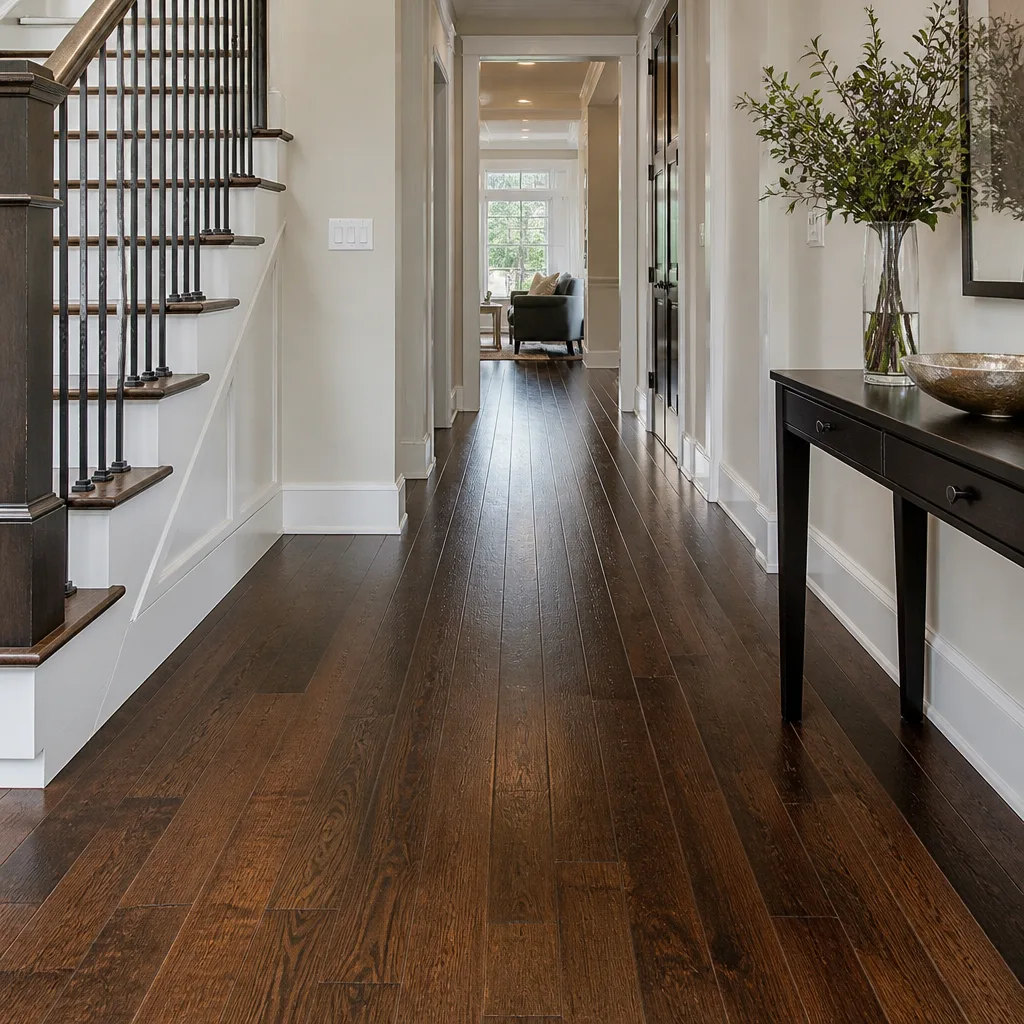 Hardwood
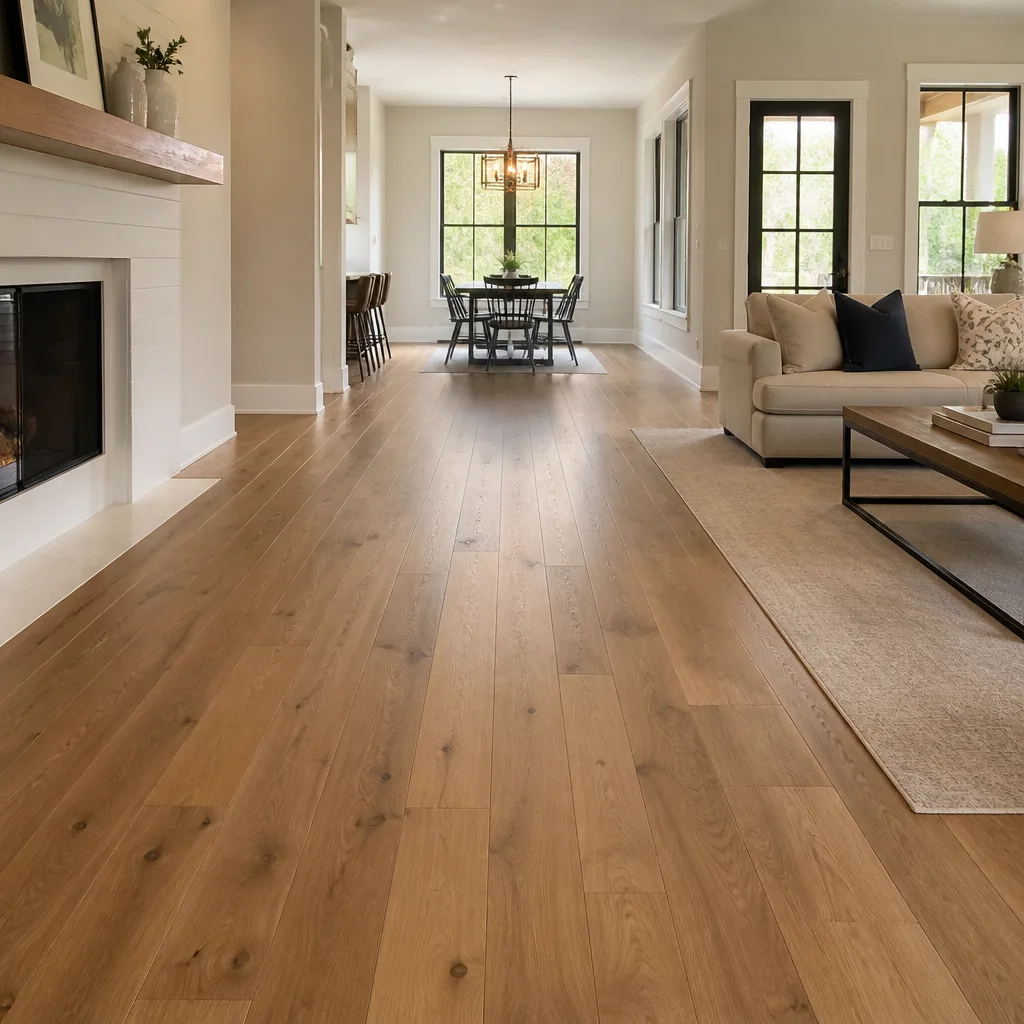 Engineered hardwood
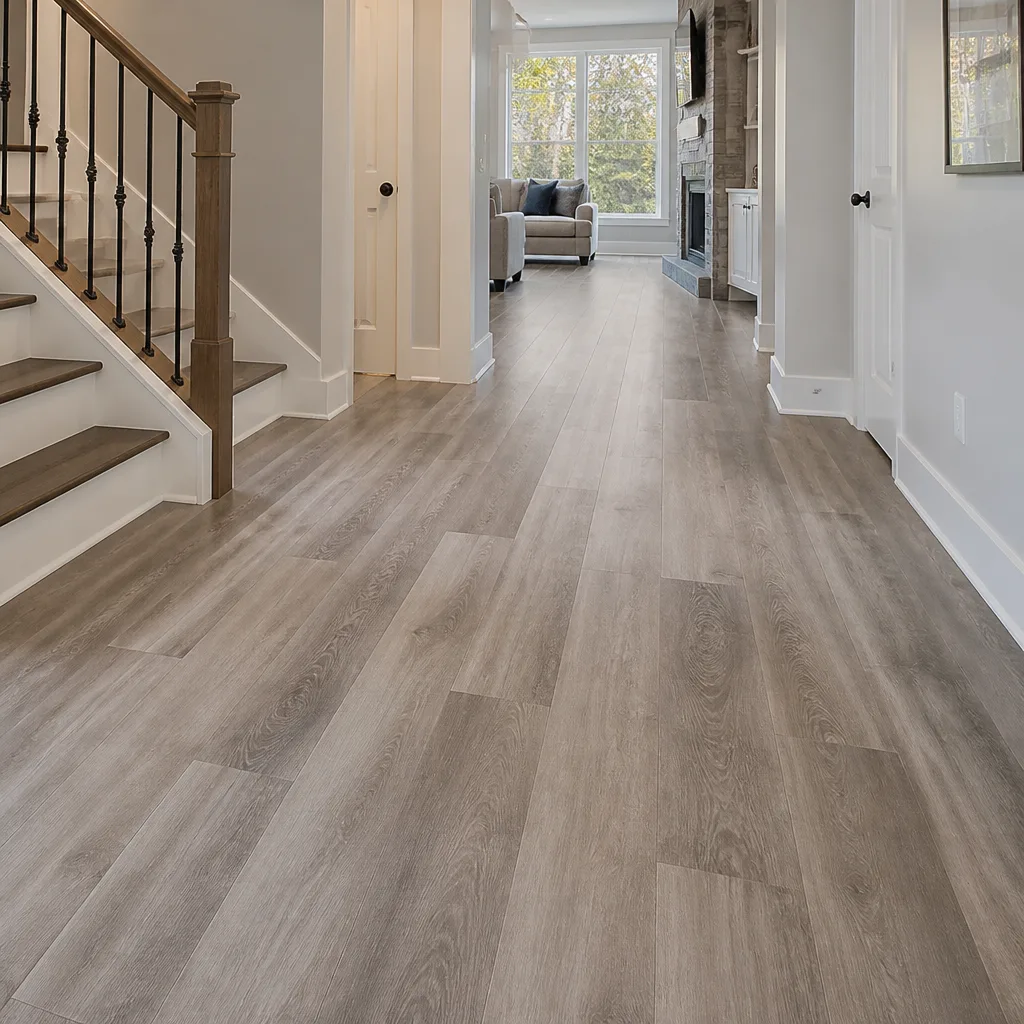 Luxury vinyl plank
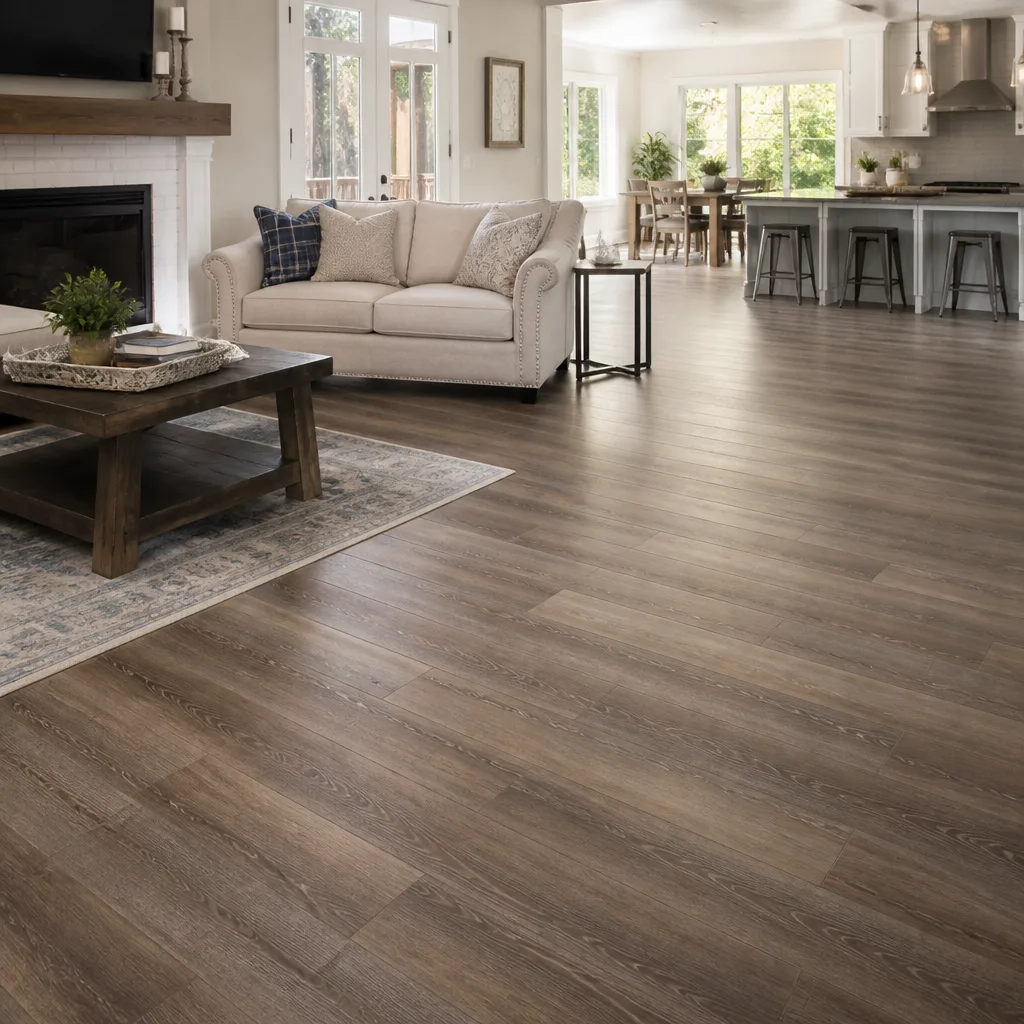 Laminate
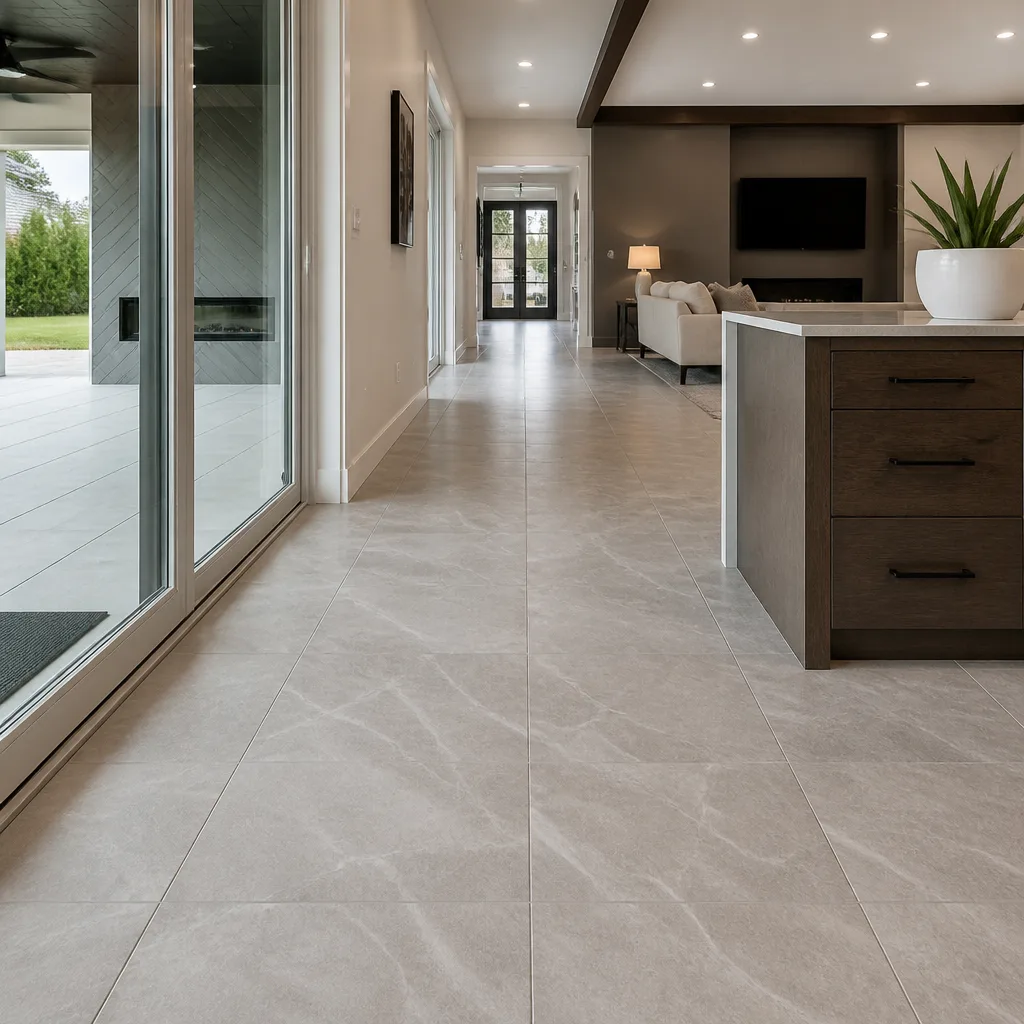 Porcelain tile
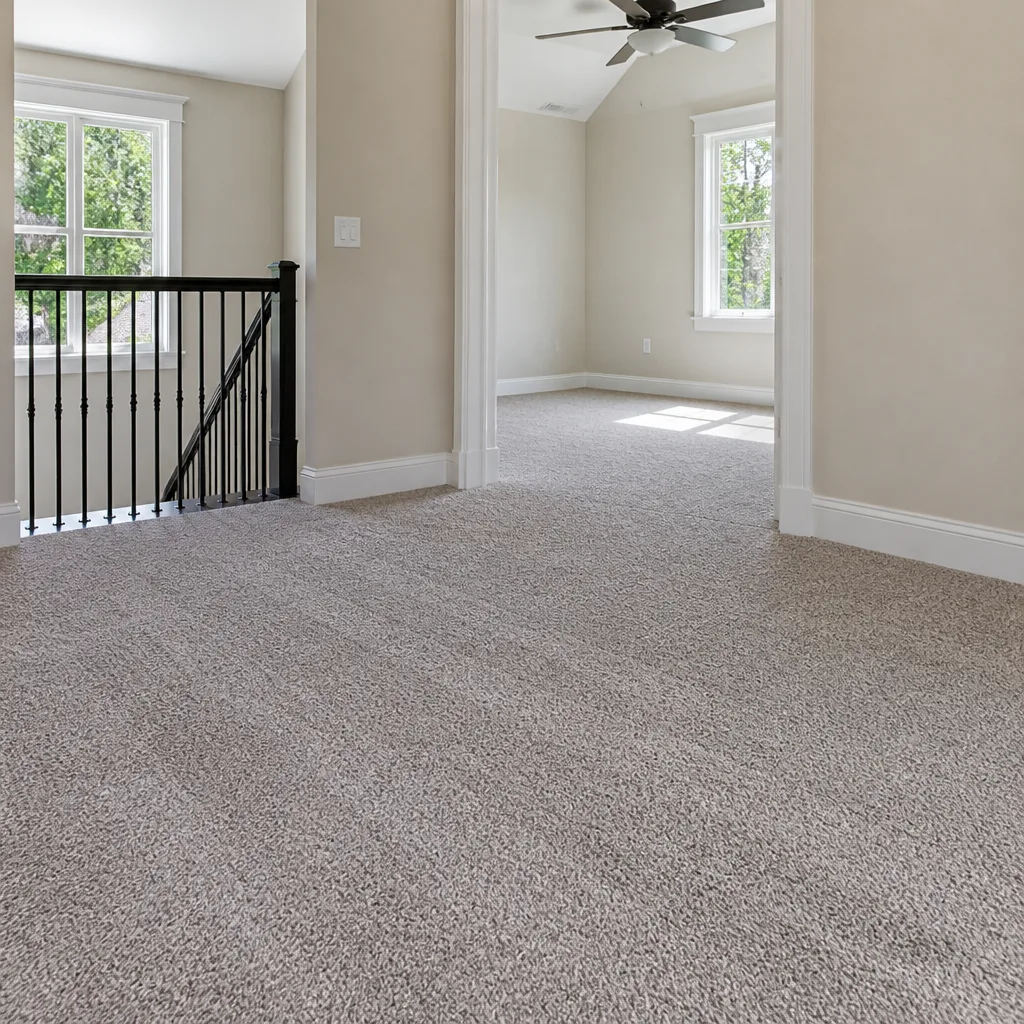 Carpet
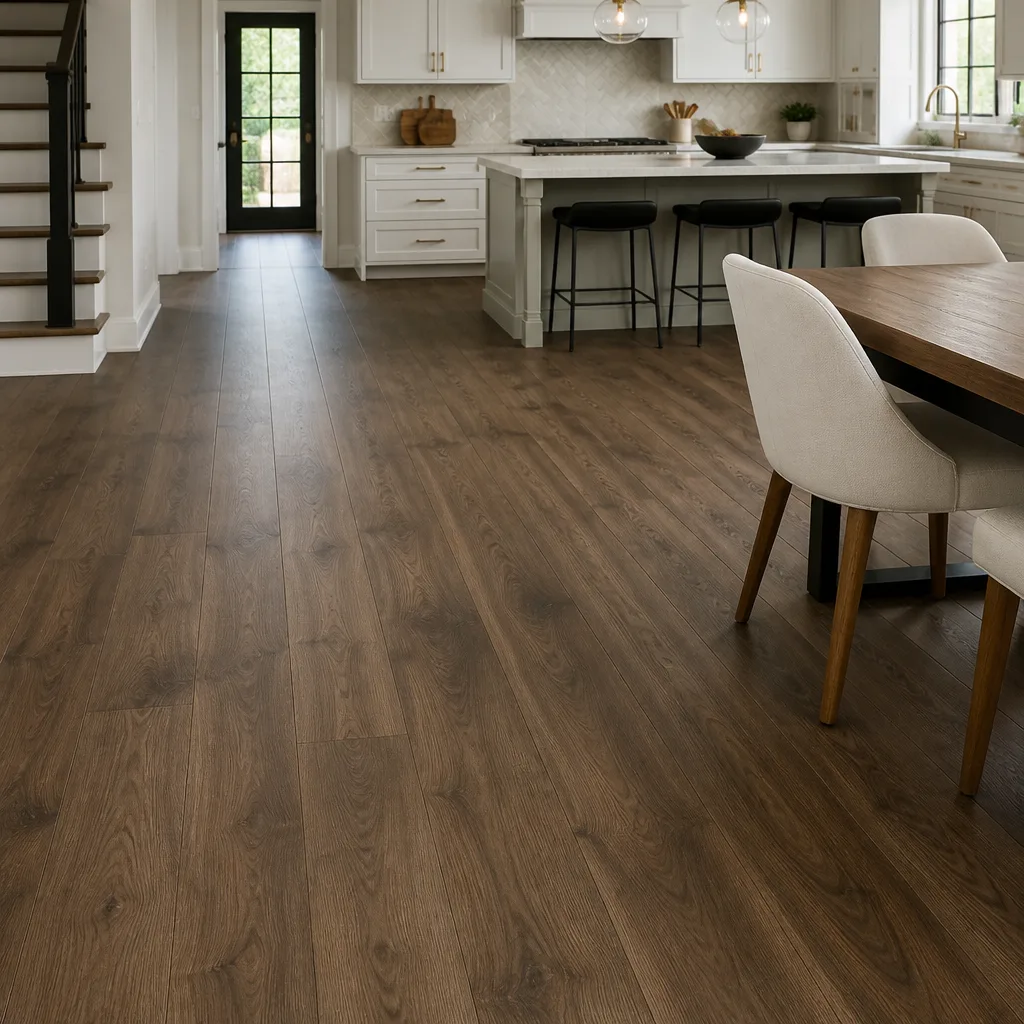 Shaw
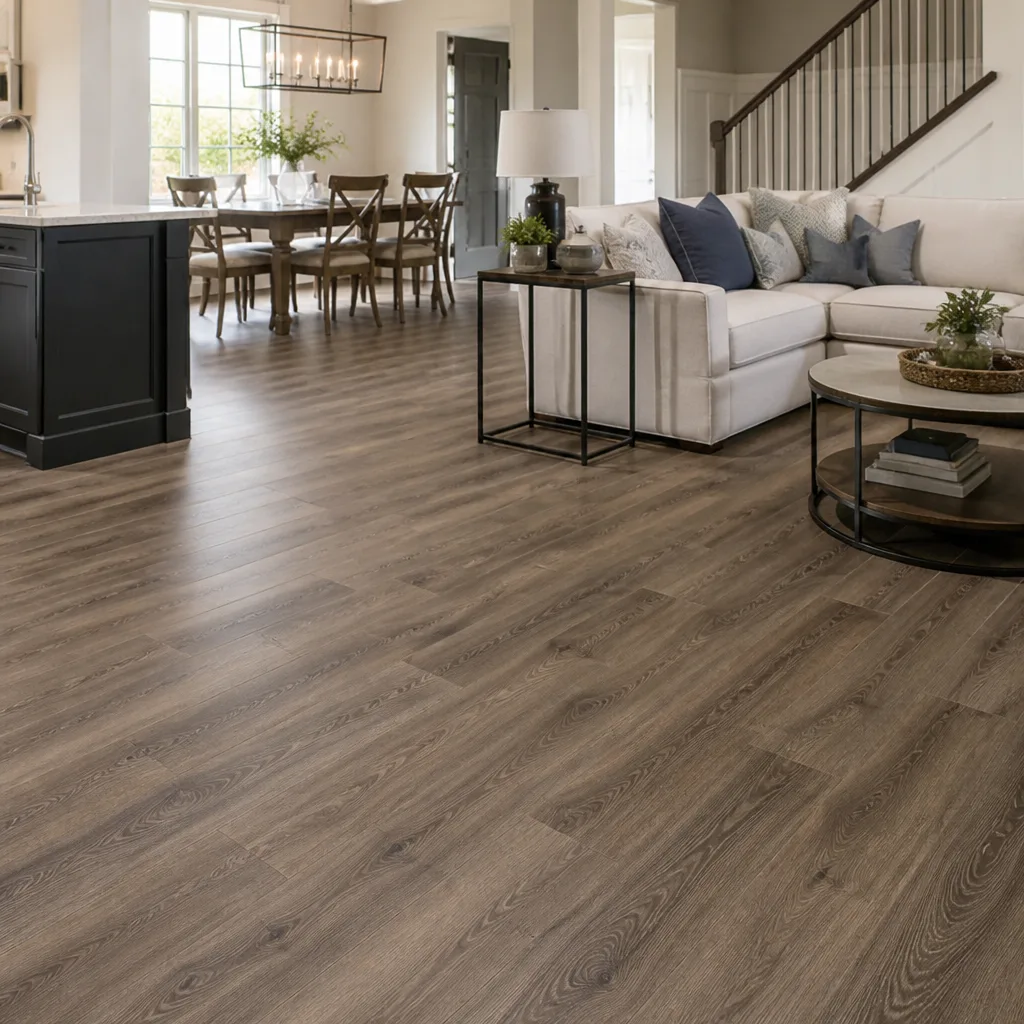 Mohawk
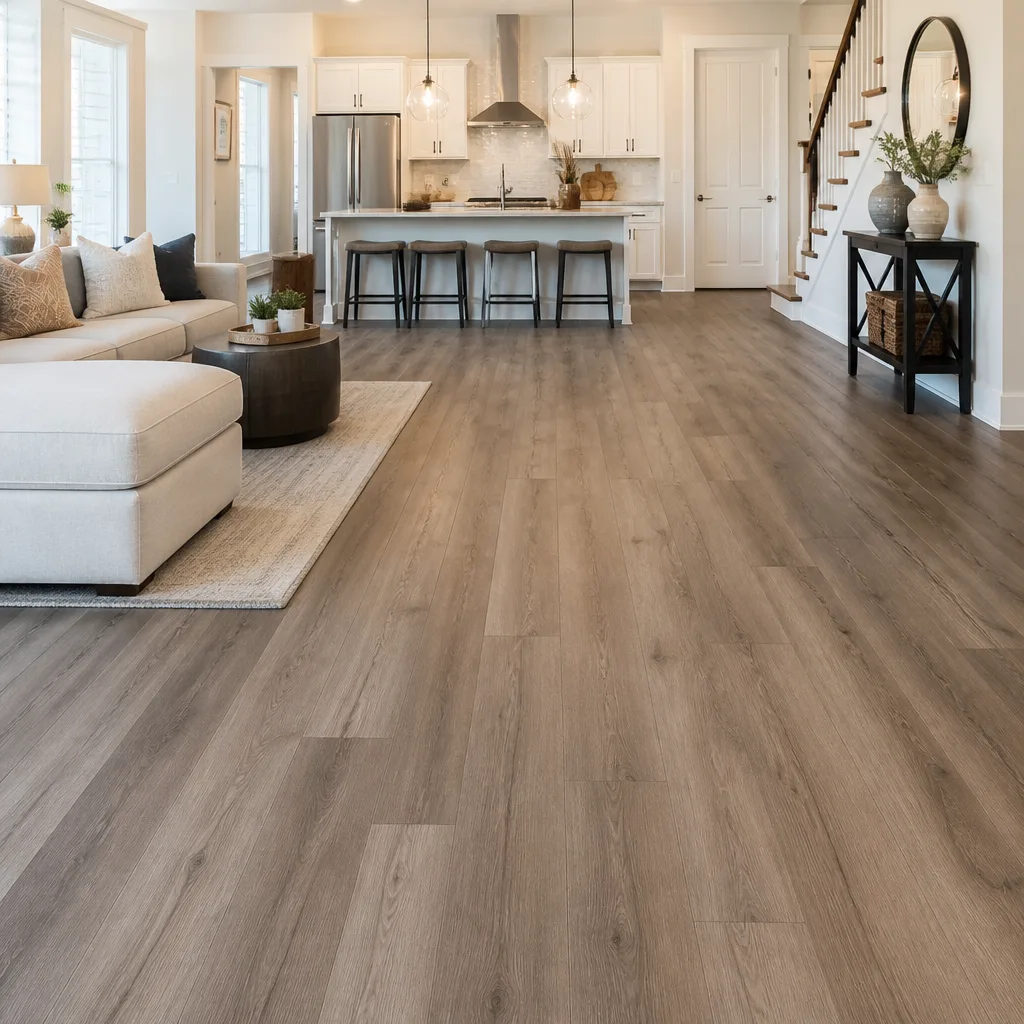 COREtec
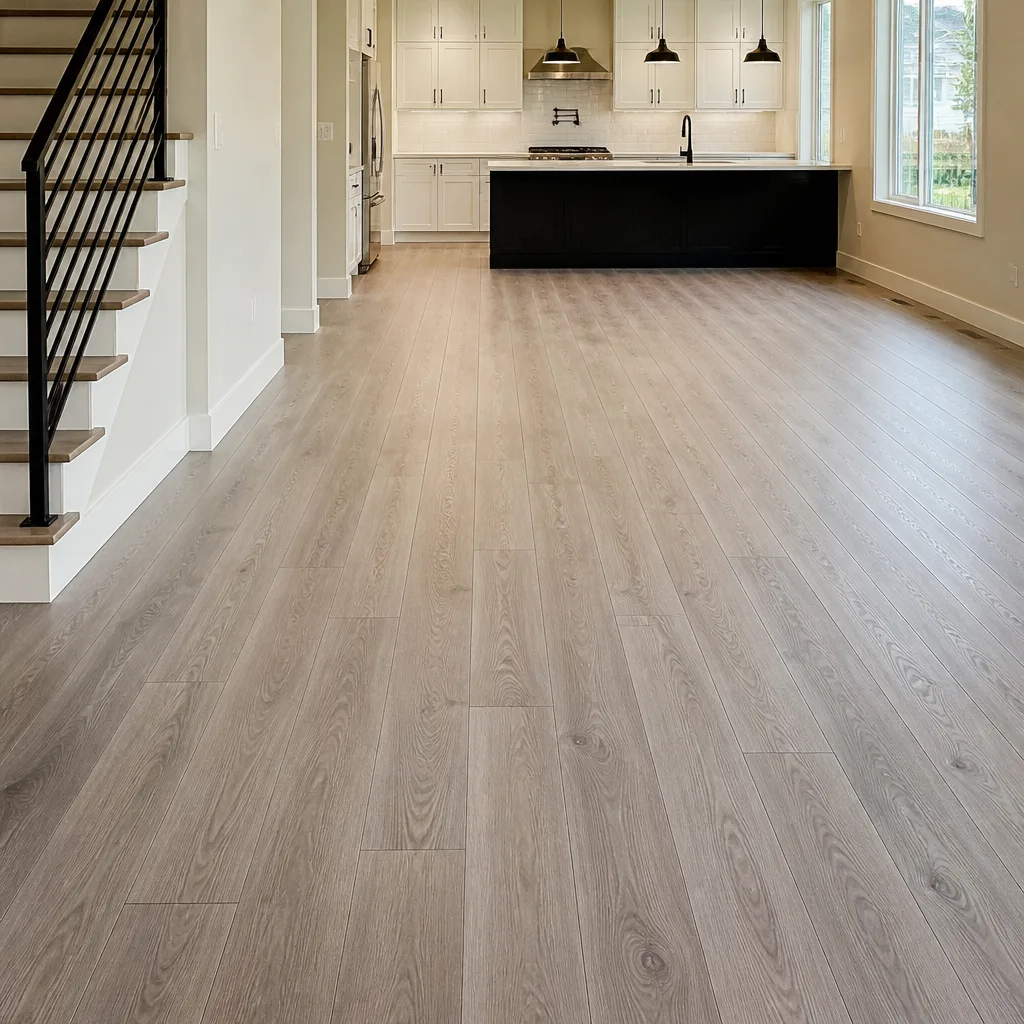 Pergo
Free in-home measure and written estimate: Shaw, Mohawk, COREtec and Pergo lines compared on your own rooms, with carpet, tile, vinyl plank, laminate and hardwood laid out side by side
Get your free estimateFix It or Start Over: Flooring Repair vs Replacement
The most expensive flooring job we see isn’t a full replacement. It’s a patch repair done six months before the homeowner finally pulls everything up anyway, paying twice for labor and disposal. The repair looked like the frugal choice. It wasn’t, because the floor underneath couldn’t hold the patch. The repair-vs-replace decision usually gets framed around budget or sentiment. It shouldn’t be. It should be framed around one question: can the subfloor and the existing material physically accept a repair and keep it? This guide walks through the diagnostics that answer that question, the material-by-material limits on what can be patched, and the honest cost math. If you’re weighing flooring repair vs replacement in North Las Vegas, this is written for your slab-on-grade reality.
Quick Answer
Repair a floor when the damage is cosmetic or isolated, the subfloor is sound, and matching material is still available. Replace when the subfloor is compromised, the damage covers a large share of the total floor area, or the product line is discontinued with no color match. In North Las Vegas, slab moisture and subfloor condition decide more of these cases than surface appearance does.
Styles & brands we work with
- Hardwood
- Engineered hardwood
- Luxury vinyl plank
- Laminate
- Porcelain tile
- Carpet
- Shaw
- Mohawk
- COREtec
- Pergo
Table of Contents
- The Three Diagnostic Tests That Decide It
- Can the Subfloor Hold a Repair?
- Material-by-Material Repair Limits
- When Water Damage Looks Minor
- The Honest Cost Math
- Discontinued Products and Repairability
- Common Mistakes to Avoid
- Frequently Asked Questions
The Three Diagnostic Tests That Decide It
Before anyone quotes a repair, someone needs to test what’s under the floor. This is the part most homeowners have never seen done, and it’s the part that changes the recommendation. The diagnostics are simple and take minutes. They come before any decision about products, brands, or cost.
- Flex test. Walk the damaged area and press firmly on the floor near the damaged spot. A floor that moves underfoot, feels soft, or gives slightly under weight means the subfloor is not solid. A repair on a subfloor that flexes will crack, lift, or pull loose within a season. That flex is the first red flag for replacement.
- Tap test. Tap the floor and, where accessible, the exposed subfloor edge with a hard object and listen. A solid, even sound across the surface is a good sign. A hollow, drum-like sound in one area usually means the subfloor has separated from the slab or lost its bond, or that fasteners have pulled. Hollow areas under a repair won’t hold it.
- Moisture meter reading. A moisture meter pressed into the floor and tested against the concrete slab reveals the moisture level in the substrate. This is the number that matters most in North Las Vegas, where most homes sit on slab. If the slab is emitting moisture above what the product can tolerate, no patch and no repair will last. That single reading can flip the entire scope.
Those three tests answer the core question. Sound slab, no flex, no hollow spots, moisture within tolerance: repair is viable. Any one of them failing: replacement is the smarter spend, because a repair that fails costs you the repair plus the replacement.
For a full picture of the floor itself, we check the material’s condition the same way. For a comprehensive look at how installation works on slab in North Las Vegas, see our guide to Flooring Installation North Las Vegas.
Can the Subfloor Hold a Repair?
The subfloor is the spine of the whole decision, and it’s the factor homeowners skip. A patched floor laid on a compromised substrate fails faster than starting over. That’s not a theory, it’s basic material behavior: the finished floor moves with whatever’s beneath it.
Here’s what makes a subfloor viable for repair:
- No deflection. The surface stays flat under load and doesn’t move when you walk it.
- No delamination. Layers haven’t separated; a tap test confirms it.
- No soft spots from rot or old water. Press in; if it gives, the repair is already doomed.
- Moisture within the range the finished product lists. The product instructions set that range, not guesswork.
- Fasteners holding. Nothing has pulled through or started to lift.
It’s tempting to say the concrete slab always matters most, but the framing assumption varies by home. In older homes it may be a wood subfloor over joists. In newer construction it’s the slab. In either case, the diagnosis is the same three tests, and the answer is the same: no repair until the base is confirmed sound.
This is where North Las Vegas climate shapes the answer. Desert air keeps indoor surfaces dry, but slab moisture doesn’t come from the air. It wicks up from the ground through concrete, and it’s invisible until the top floor fails. A homeowner in a dry climate may not think of moisture as their problem. Under a slab, it can be exactly the problem.
When the base passes, repair can be the right call and the right money. When it fails, replacement is the durable path. For homes with tile over compromised slab, our tile flooring installation guide covers how that scope is handled.
Material-by-Material Repair Limits
Not every material repairs the same way, and some repair better than others. The difference is often whether a visible patch stays visible. That’s the line to watch.
Luxury vinyl plank (LVP)
LVP is the friendliest material to repair, and that’s why it’s so common in rental properties and pet homes. Floating planks, including lines like COREtec and Shaw, can often be swapped plank-by-plank if the same SKU is still in production. The key is the same SKU. A different batch or a discontinued color won’t blend, and a mismatched plank in the middle of a floor is a permanent reminder. Keep a spare box from the original install if you can; we’ll come back to that.
Tile
Hard tile, whether ceramic or porcelain like Daltile, is a different story. Glue-down tile repairs almost always telegraph a color mismatch within a year of UV exposure. The replacement tile starts clean and slightly lighter than the surrounding floor, and sunlight deepens that difference over months. A repair that’s invisible on the day it’s laid can be visibly different by the following spring. Where the tile line is discontinued or the dye lot is gone, replacement of the entire field is often the only way to keep the floor uniform.
Hardwood
Hardwood is the most repairable and the most preservable. Individual boards can be replaced, and where the wood is thick enough, the whole floor can be sanded and refinished, which is a repair on a wide scale. Refinishing preserves the existing floor instead of replacing it. Whether a specific floor can take that depends on wood thickness and condition, checked at the estimate visit, not over the phone.
Carpet
Carpet repairs are usually about matching the same carpet, not blending a different one. A damaged area can sometimes be patched from offcut material. Once the carpet is discontinued, a patch almost never matches cleanly. If you’re comparing this against a full replacement, our carpet installation page lays out how new carpet is scoped.
When Water Damage Looks Minor
Water damage is the classic case where the surface lies. A small dark spot on the floor or a slightly swollen edge can look like a two-square-foot problem. Underneath, the damage often runs far wider than what’s visible, and the moisture meter is what tells the truth.
In North Las Vegas, slab moisture readings are the deciding number. Water doesn’t stay where a spill happened. It wicks laterally through the substrate. What looks minor on top can signal subfloor separation underneath, which is why a patch over a damp subfloor will fail regardless of the material on top.
Signs that water damage is bigger than it looks:
- Dark or discolored spots that reappear after cleaning.
- Edges that have swollen or curled.
- A hollow tap sound around the visible spot.
- A moisture meter reading that’s high across a wider footprint than the damage.
- A musty smell in a closed room, which can indicate moisture that’s spread.
When the moisture reading changes the scope, the decision moves from repair to replacement, and the honest thing is to say so. A water-damaged floor patched over a damp slab is money spent twice.
The Honest Cost Math
This is where it gets practical. The repair-vs-replace decision usually comes down to a simple comparison: repair labor per square foot versus replacement labor per square foot, and the percentage of the total floor that’s actually damaged. Below a certain share, repair is cheaper. Above it, replacement wins per square foot of total floor.
- Small isolated damage (roughly a single room’s worth or less): repair is usually the cheaper path, assuming the subfloor passes and matching material exists.
- Damage across one large room and into adjoining rooms: the math starts to tilt toward replacement, because repair labor is per-square-foot and the product is no longer the expensive part.
- Damage tied to a failed subfloor or slab moisture: replacement is the correct spend regardless of how small the visible damage looks.
- Discontinued product with no match: replacement of the field is often the only way to keep the floor uniform, so repair is off the table.
The important caveat: we won’t quote a dollar figure for your job over the phone. The price is set per job by the written estimate, and that estimate comes after someone looks at the floor, tests the subfloor, and checks whether matching material exists. A phone quote for a repair is a guess, and we’d rather not guess with your floor.
Two more cost realities that get missed:
- Disposal. Replacement includes removing and disposing of the old floor, which costs labor and hauling. A repair avoids that. So when replacement and repair land close in labor cost, the disposal difference is what tips the calculation.
- The cost of a failed repair. A repair that fails means you pay for the repair, then the replacement, including disposal both times. That’s why a repair that’s cheap on paper can be the most expensive choice on the decision.
For landlords and property managers in North Las Vegas, this math matters most on tenant turnover. Durability per dollar over a longer horizon usually favors replacement with a product suited to heavy use, and the right product makes the difference.
Discontinued Products and Repairability
Repairability has a shelf life, and it’s tied to the product line, not the floor. A floor is only repairable while matching material is still available. The moment a color or SKU is discontinued, every future repair becomes a compromise: a different dye lot, a slightly different color, a visible patch.
This is why buying an extra box at installation time is cheaper insurance than sourcing a discontinued SKU three years later. That spare box, stored dry and out of sunlight, is the cheapest form of repairability you can own. It’s the single best habit for a homeowner who plans to keep the floor for years.
The age of a product line matters more than the age of the floor. A floor can be relatively new and already have a discontinued color. A floor can be older and its line still in production. Check the SKU and whether the color is still made before assuming a patch will match. When we install a floor, we tell customers which lines are stable and which might change, so they can make that call before, not after.
Common Mistakes to Avoid
- Repairing without testing the subfloor. Assuming the damage is cosmetic because the top looks fine means patching over flex or moisture, and the repair fails fast. Test first, patch second.
- Mismatching tile dye lots. Glue-down tile repairs with a different dye lot look close on day one and different within a year of UV exposure. Match the lot, or replace the field.
- Skipping the moisture meter on slab. In North Las Vegas, where most homes sit on slab, this is the single reading that most often flips the decision. Skipping it is the most expensive mistake on this list.
- Throwing away the spare box. Homeowners who toss the leftover material lose the most affordable repair option they’ll ever have. Keep a box.
- Letting a generalist patch tile. Tile repairs need someone who knows dye lots, expansion, and UV fading. A generalist patch often looks wrong in a year.
- Patching when the damage is already large. By the time small damage has spread into a whole room, you’re often paying repair labor on most of the floor anyway. Replacement is the better value at that point.
- Assuming a repair is automatically cheaper. Once you count a failed repair, disposal, and redo, an honest replacement can cost less over the life of the floor.
See the difference
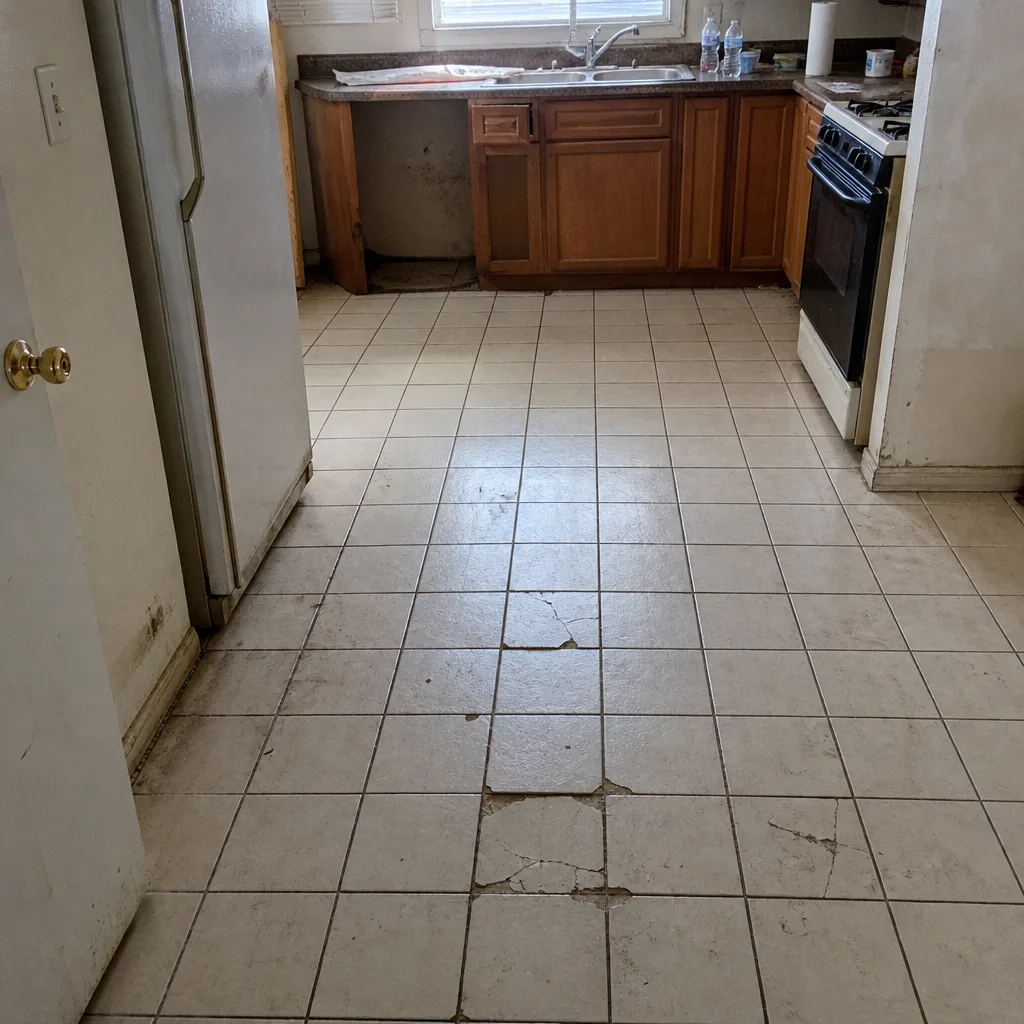 Before
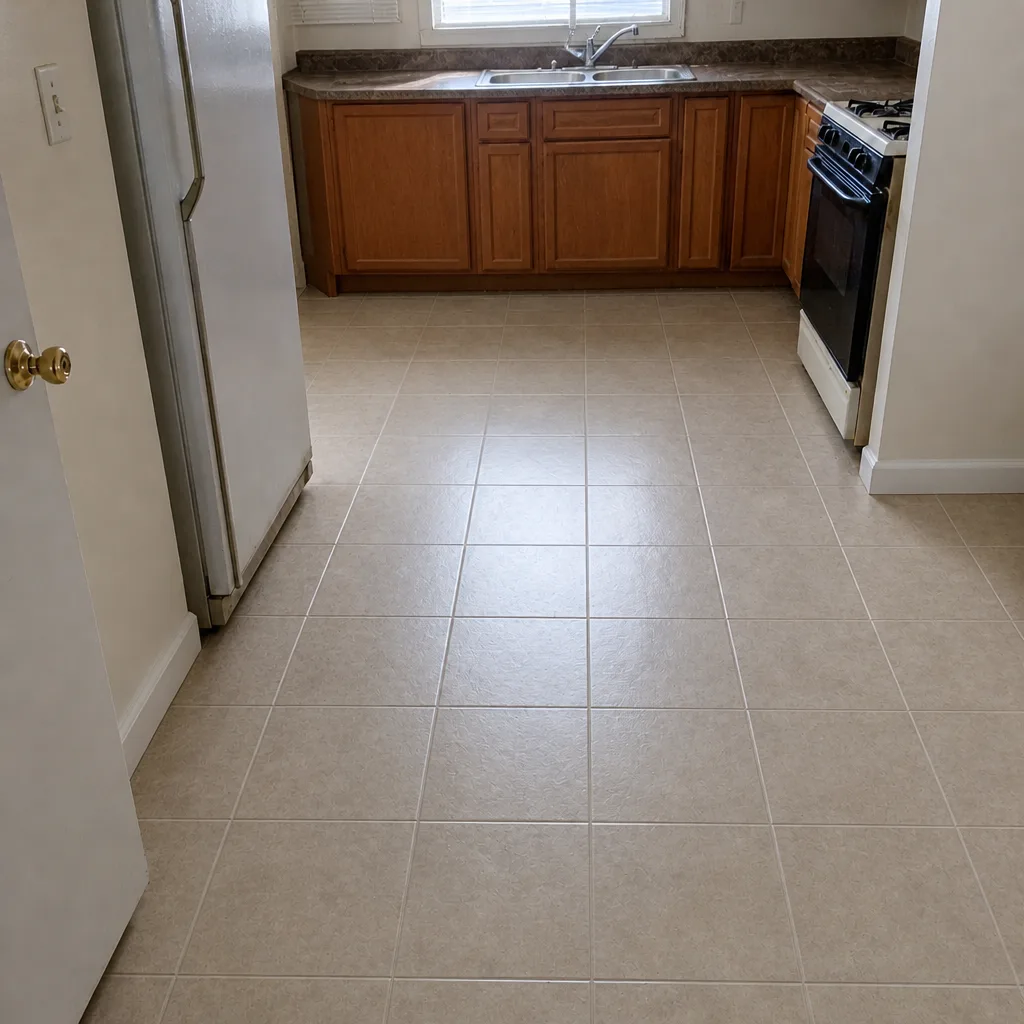 After
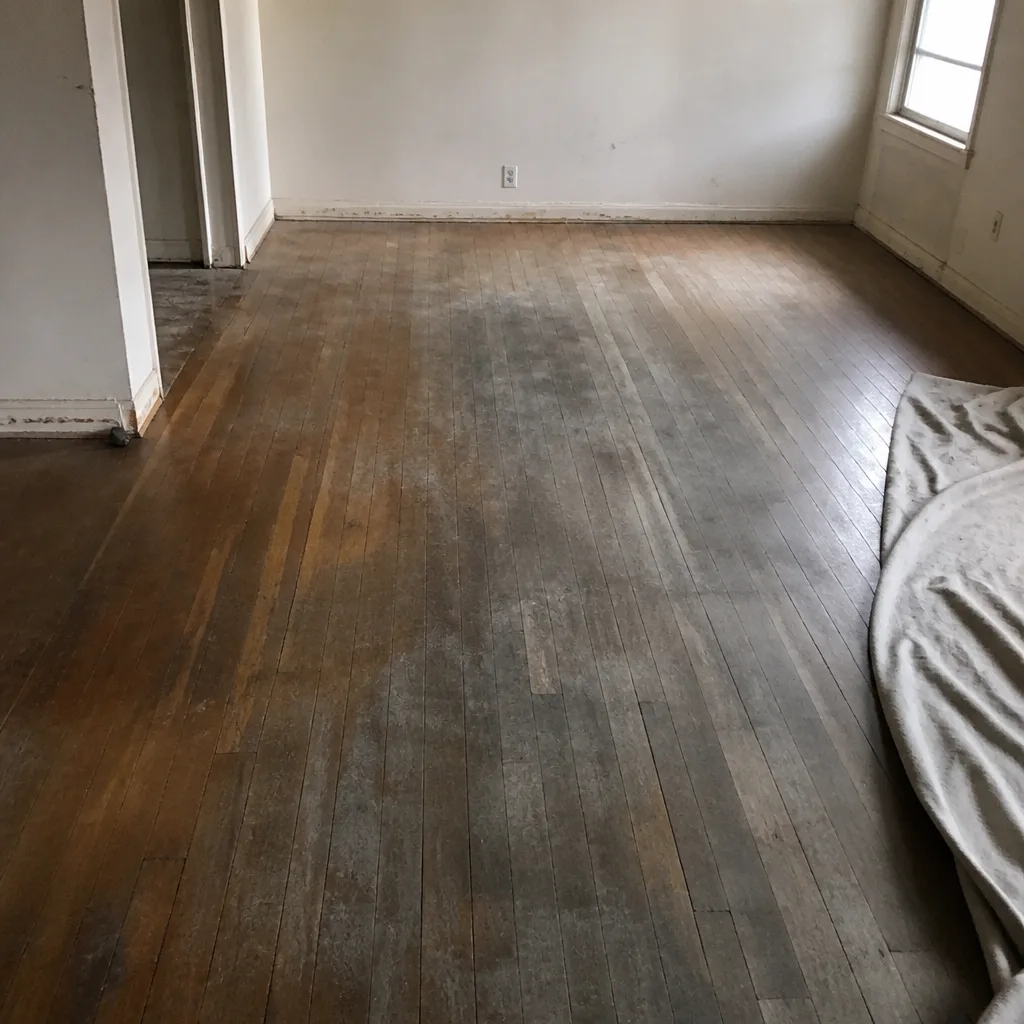 Before
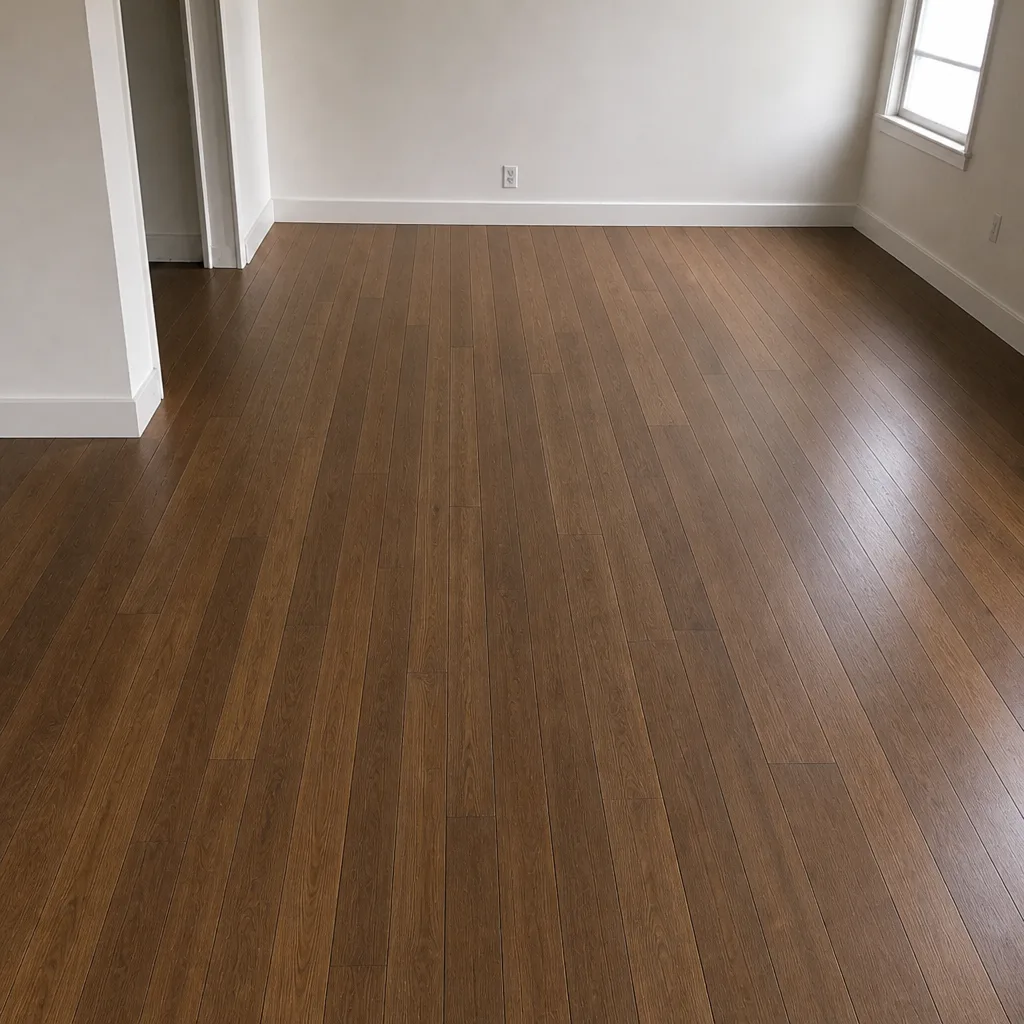 After
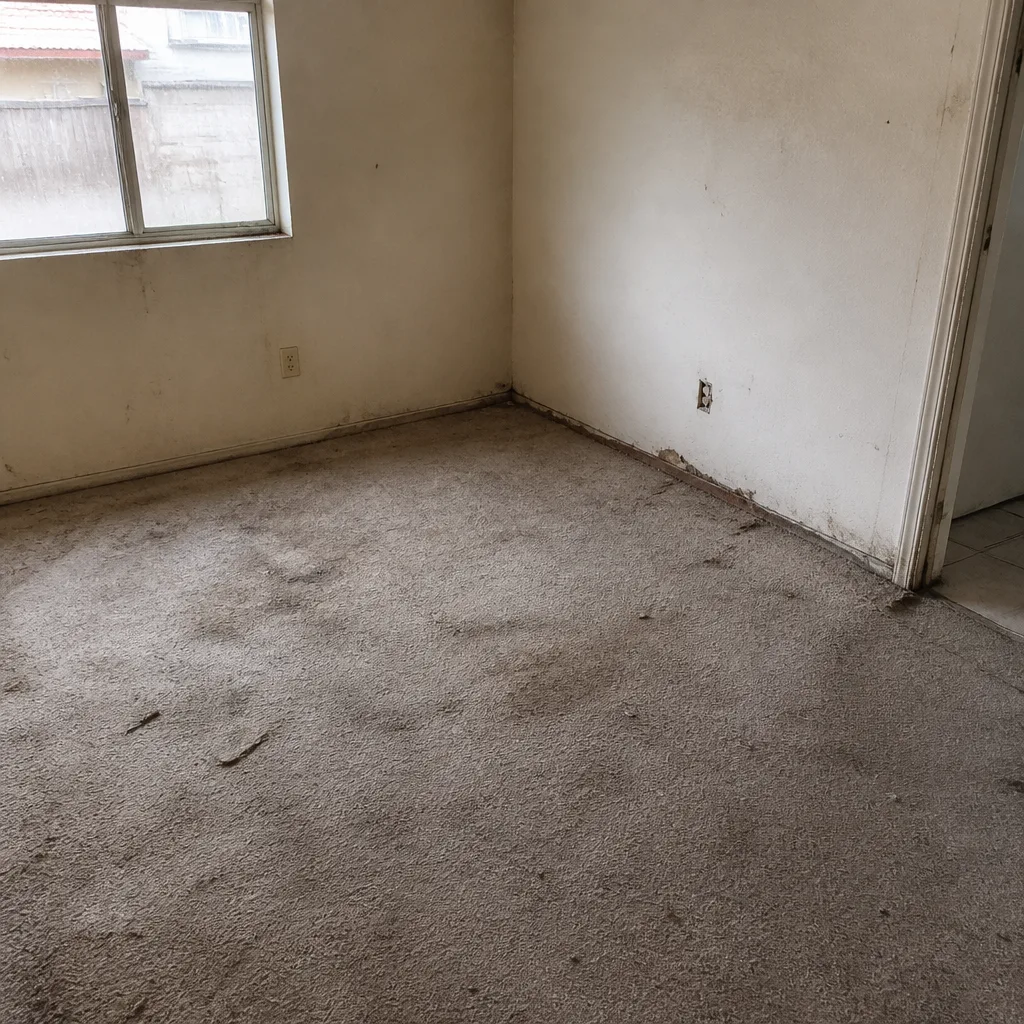 Before
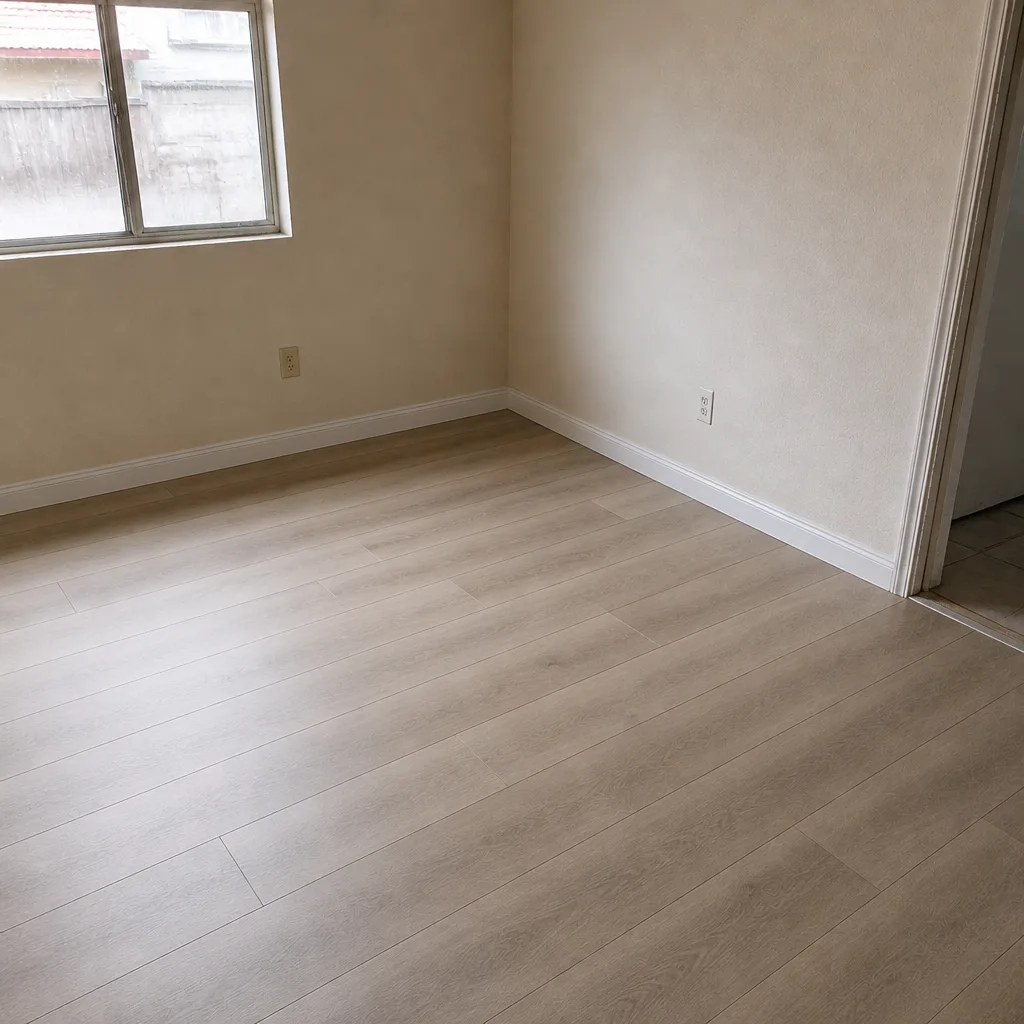 After
When to Call a Professional
Call a professional when the flex test shows movement, when the tap test finds hollow spots, or when the moisture meter reads against the product. Call when the damage covers more than a small isolated area, when the tile color is discontinued, or when you can’t find the original SKU. Call when water damage looks like more than a surface spot. And call if you’d rather have someone who has seen how these jobs go in North Las Vegas slabs tell you honestly whether repair or replacement is the better spend. Flooring Installation North Las Vegas offers free estimates in North Las Vegas. Call (888) 515-5223. We answer 24/7. Fast dispatch from 7am to 7pm, Sunday through Friday.
Frequently Asked Questions
We don’t quote a dollar figure over the phone, because the price is set per job by the written estimate. A repair is usually the smaller spend when the damage is isolated and matching material exists, and replacement is the better value once the damaged share of the floor grows or the subfloor needs work. The estimate visit tests the subfloor first, which is what makes the quote honest. Call (888) 515-5223 for an exact quote, estimates are free.
Yes. The estimate is free, and it’s the point where the subfloor tests happen and the price is written down. Nothing gets quoted before someone has looked at the floor and checked the base underneath. Call (888) 515-5223 to schedule it.
Sometimes, but it depends on whether a matching dye lot or SKU is still available. A patch with a different lot can look close at first and visibly different within a year of UV exposure. When there’s no match, replacing the field is often the only way to keep the floor uniform. The estimate visit is where we check what’s still out there.
The schedule is set at the estimate, not before. Repair and replacement timelines depend on the material, the size of the floor, and the condition of the subfloor. You’ll get a written schedule with the written estimate so you know what you’re planning around. Call (888) 515-5223 to get it started.
It can be, because water wicks laterally through the substrate and the visible spot often understates the damage. The moisture meter reading is what tells the truth. If the slab is emitting moisture above the product’s tolerance, a patch won’t last and replacement is the right call. Call (888) 515-5223 and we’ll read the slab before anyone recommends a patch.
Yes. Refinishing the existing hardwood is a repair on a wide scale, and it preserves the floor you already have. Whether your floor can take a refinish depends on wood thickness and condition, which is checked at the estimate visit. Call (888) 515-5223 to have that looked at.
The Bottom Line
Repair vs replacement comes down to whether the subfloor and the existing material can accept a repair and keep it. Test first: flex, tap, and moisture meter. Repair when the damage is isolated, the base is sound, and matching material still exists. Replace when the base has failed, the damage covers a large share of the floor, or the product is discontinued with no match. Keep a spare box. Do the honest cost math, including a failed repair and disposal. And in North Las Vegas, let the slab speak. If you’re not sure which way your floor tips, call us.
Call (888) 515-5223 for a free estimate. We answer 24/7. Fast dispatch from 7am to 7pm, Sunday through Friday. Our technicians have up to 12 years of experience, and we install and service the floor you choose from Shaw, Mohawk, COREtec, Karndean and the rest of our nine-brand portfolio. We’ll test the subfloor, tell you straight whether repair or replacement is the better spend, and put the price in writing. For homes across North Las Vegas, the right call starts with an honest look at what’s under the floor.
Written by the team at Flooring Installation North Las Vegas.