
Last updated November 18, 2026
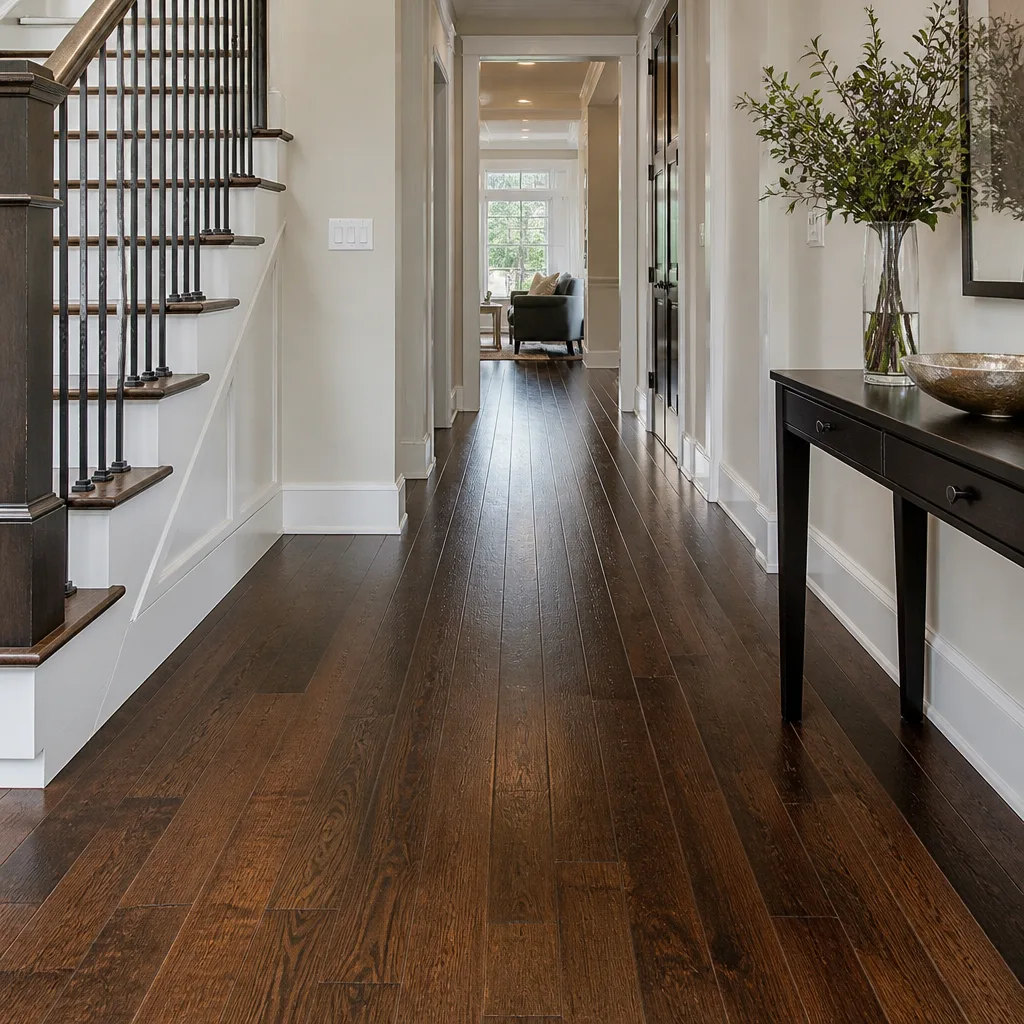 Hardwood
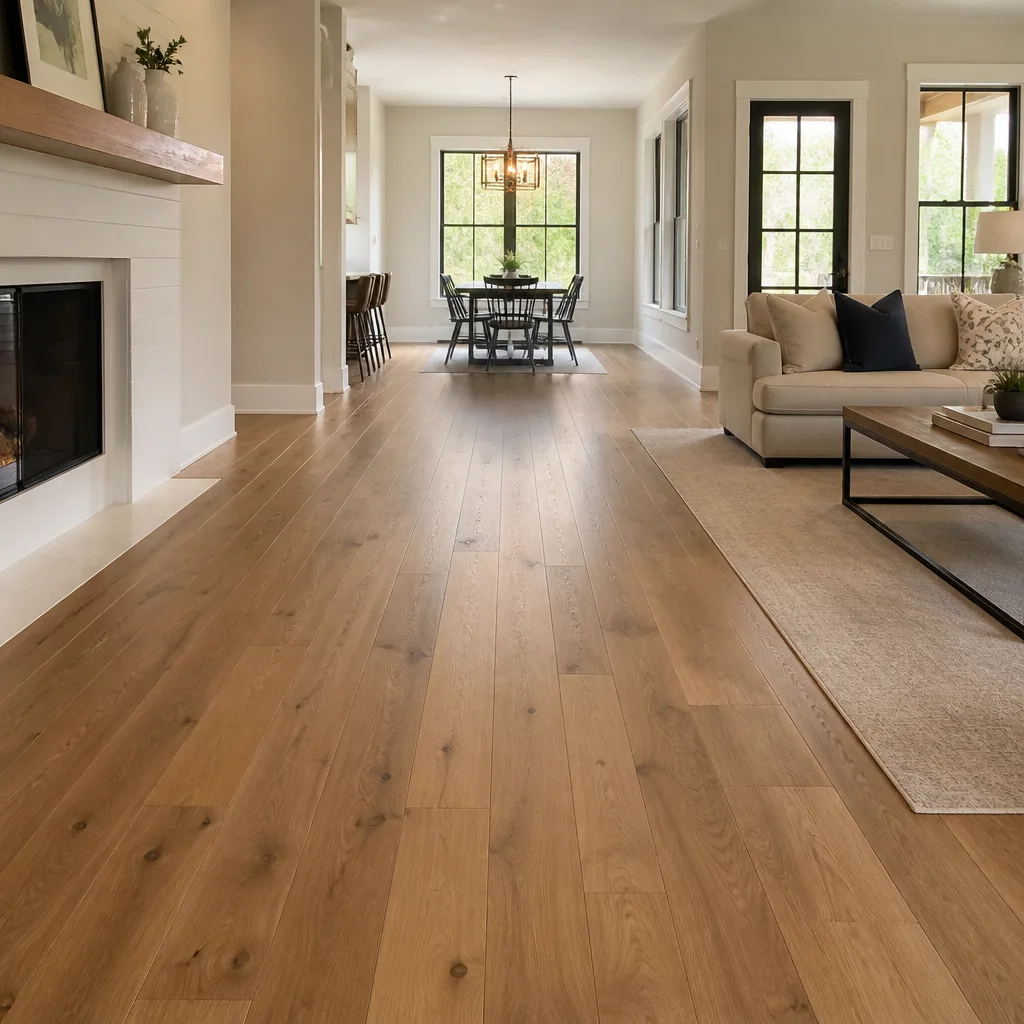 Engineered hardwood
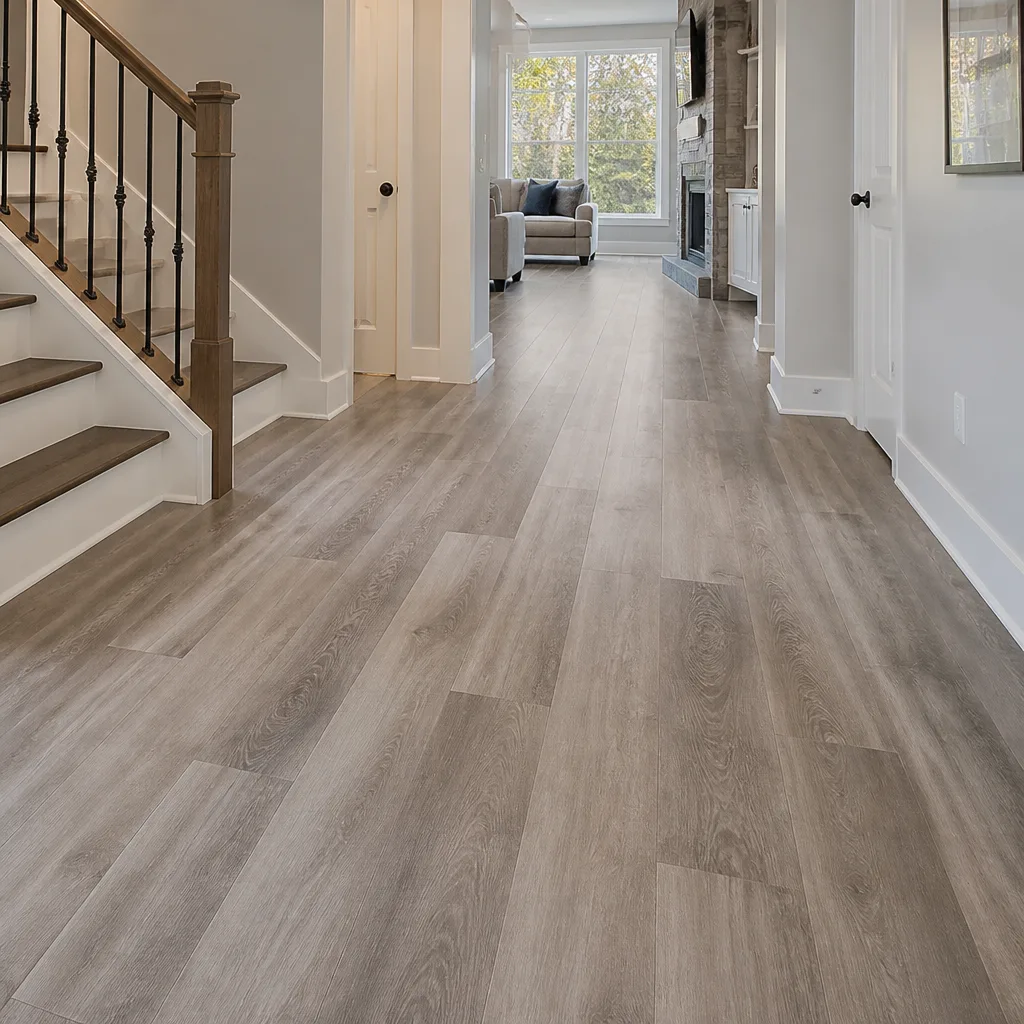 Luxury vinyl plank
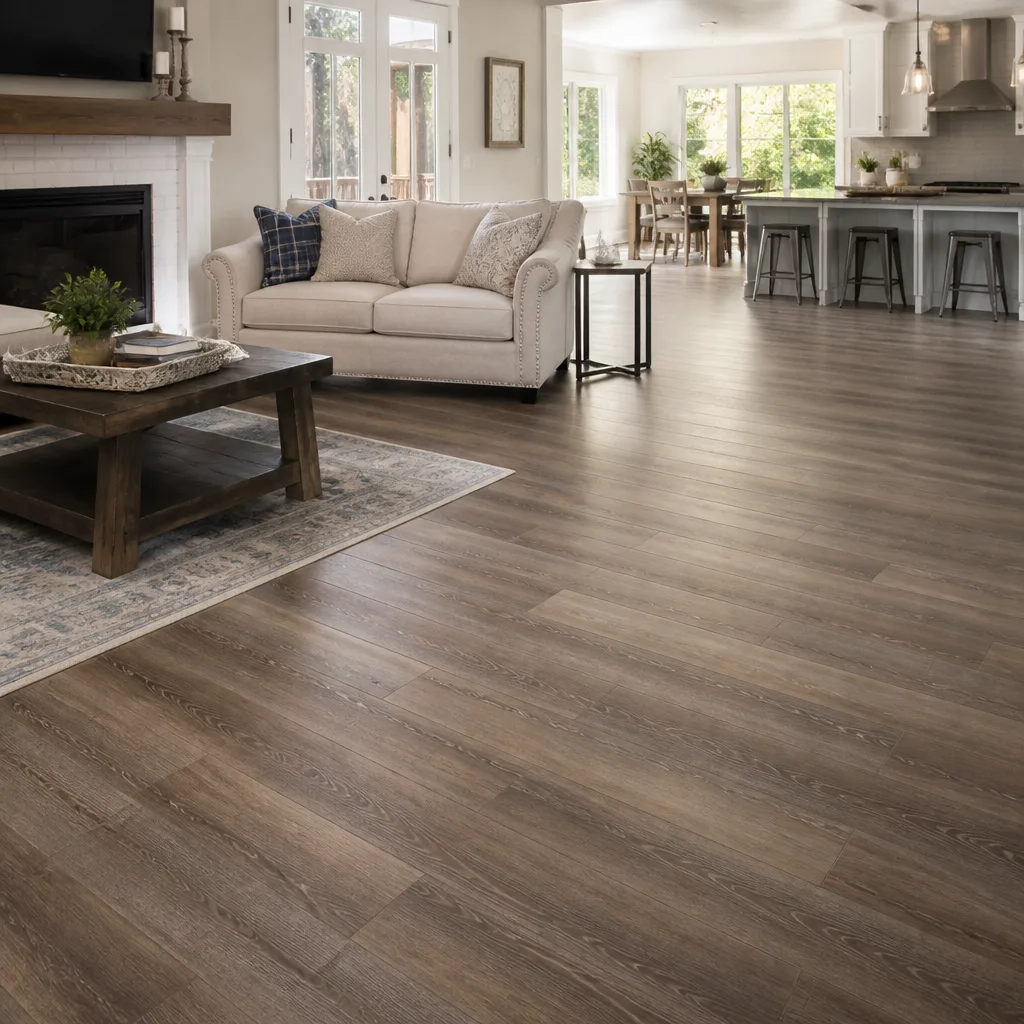 Laminate
 Porcelain tile
 Carpet
 Shaw
 Mohawk
 COREtec
 Pergo
Free in-home measure and written estimate: Shaw, Mohawk, COREtec and Pergo lines compared on your own rooms, with carpet, tile, vinyl plank, laminate and hardwood laid out side by side
Get your free estimateChoosing the Right Flooring for Every Room in North Las Vegas Homes
Most homeowners spend the bulk of their flooring decision on color and the smallest slice on performance specs, then live with the consequence two years later. In our experience, the callback almost never lands in the bedroom. It lands in the kitchen where the dishwasher leaked, or the bathroom where the floor flexed under a heavy vanity. This guide flips that habit. We’ll walk room by room through North Las Vegas homes and match material to the way each space actually gets used: the dusty entry, the wet bathroom, the open great room, the quiet bedroom. By the end you’ll know what belongs where, what to avoid, and what to check before you buy.
Quick Answer
For North Las Vegas homes, the right floor is chosen by room function, not by trend. Hard, water-tolerant surfaces belong in the entry, kitchen, bathrooms, and laundry; soft, quiet surfaces belong in bedrooms and media rooms; and a single continuous material works best across an open great room when the subfloor is prepared properly and the product is rated for the span. Because most homes here sit on concrete slab, moisture handling and flatness are the decisions that matter most.
Styles & brands we work with
- Hardwood
- Engineered hardwood
- Luxury vinyl plank
- Laminate
- Porcelain tile
- Carpet
- Shaw
- Mohawk
- COREtec
- Pergo
Table of Contents
- Why North Las Vegas Subfloors Drive Every Choice
- Entry and Mudroom: Grit, Drag, and the Desert Lot
- Kitchen: The Case Against Laminate Near Water
- Bathrooms and Laundry: Zero Tolerance for Water
- Bedrooms and Media Rooms: Where Carpet Still Wins
- Great Room Continuity Across the Open Plan
- Property Managers and Rentals: Durable First
- How to Think About Cost and Value
Why North Las Vegas Subfloors Drive Every Choice
Start with the ground under you, because it changes everything above it. Most homes across North Las Vegas sit on a concrete slab rather than a raised wood subfloor, and that single fact narrows your options in useful ways. Slab floors don’t have the give of a wood frame, so unevenness shows up fast under thin materials. A slab also has no cavity beneath it to hide a slow leak, which is why water tolerance matters more here than in a house with a crawl space.
Before any material is chosen, we look at three things at the estimate:
- Flatness. Concrete slabs rarely come perfectly level. High and low spots telegraph through rigid materials like tile and thin vinyl, and they make planks rock. The product instructions set the flatness tolerance, and prep work brings the slab into range.
- Moisture from below. Concrete wicks moisture. A slab that reads wet will ruin a floor that can’t handle it, which is why we test before recommending anything.
- Existing adhesive or old flooring. Older North Las Vegas homes sometimes have residue or a layer that has to come up before new material goes down.
This is also where we explain our position: we install carpet, install tile, and refinish existing hardwood. If your slab tests wet, that pushes the conversation toward tile or a water-resistant plank rated for the condition, not toward a material that will fail quietly. The flatness and moisture findings set the plan, and the plan sets the price. Get this part right and the rest of the rooms fall into place.
Entry and Mudroom: Grit, Drag, and the Desert Lot
The entry is where a North Las Vegas home takes its hardest hits. Desert lots mean windblown grit, and that grit gets dragged across the first few feet of floor every time someone walks in. Sand and small gravel act like sandpaper underfoot, and they grind at whatever surface sits at that threshold. This is the one room where the wear layer is the whole story.
For a busy household entry, we steer toward luxury vinyl plank with a wear layer of 6 mil or better. A thicker wear layer resists the abrasion that a thinner product gives up on, and it stands up to the scrape of shoes and pet claws far better than a decorative surface. Brands we install that fit this role include LifeProof and Mannington, both of which offer water-resistant planks suited to a doorway that sees dirt and the occasional wet umbrella.
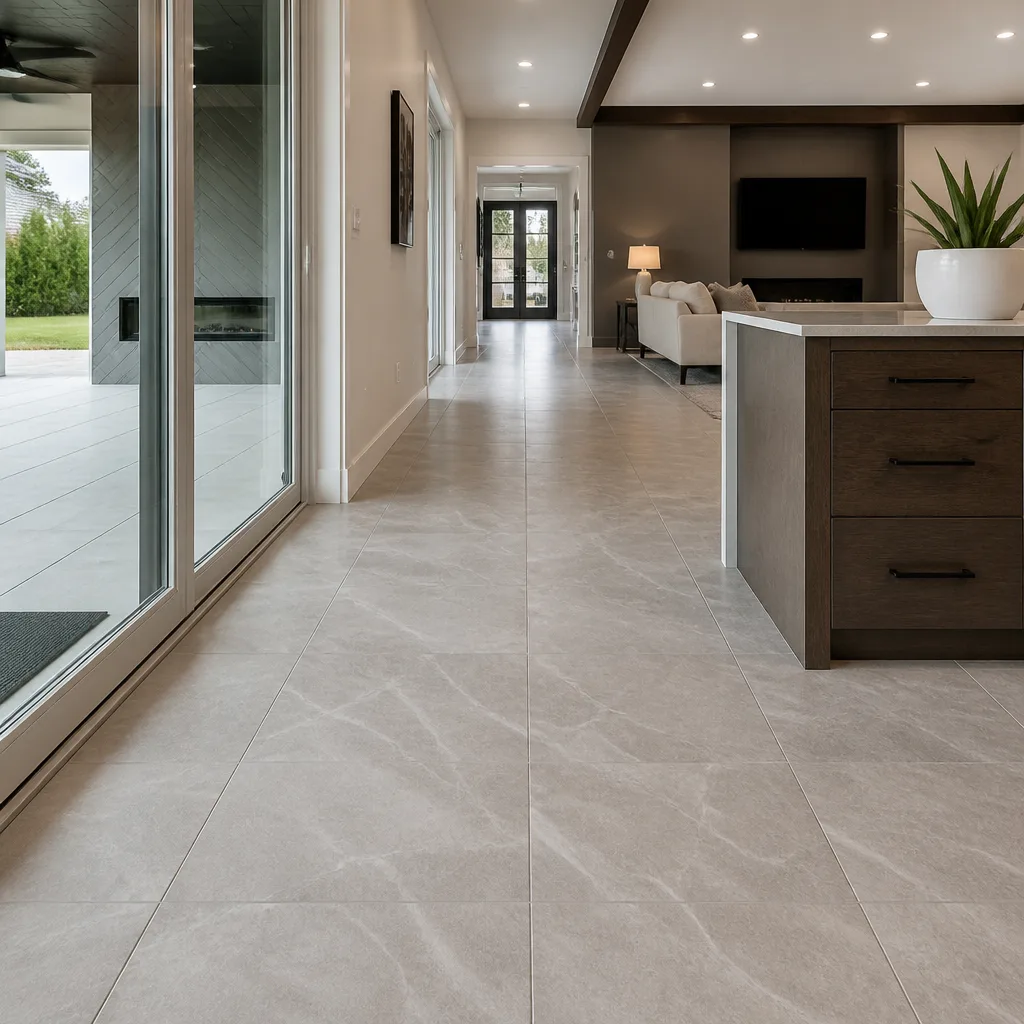
So why not tile at the entry? Tile is tough and easy to sweep, and in a formal home with a covered porch and a defined foyer, large-format porcelain from a line like Daltile is an excellent choice. It reads as a deliberate, finished surface and it wipes clean in seconds. But tile has grout lines that collect desert grit, and it’s unforgiving on bare feet on a cold morning. In a family entry that sees constant traffic, a plank floor is more forgiving and easier to live on. In a formal entry, we often reverse the recommendation and go tile. Match the material to the door, not to the trend.
Kitchen: The Case Against Laminate Near Water
Here’s a rule we hold to: we don’t recommend laminate for a North Las Vegas kitchen that shares a wall with an ice maker, a dishwasher, or a refrigerator water line. Laminate has a core that swells when water gets into it, and that swelling doesn’t dry back down. It buckles at the seams and stays buckled. In a desert climate that’s easy to forget, because the air is dry and the floor looks fine right up until a supply line drips under the cabinet for a month.
When a kitchen has water sources on the perimeter, we point homeowners toward two directions:
- A water-resistant plank rated for wet areas. A product built for moisture gives you the look of wood or stone with a core that tolerates a spill and a slow drip far better. LifeProof and Mannington both offer options that fit a busy kitchen.
- Porcelain tile. Tile shrugs off water entirely. A wood-look or stone-look porcelain from Daltile gives you a surface that won’t care if the ice maker line lets go. Grout choice and sealing are the maintenance conversation that comes with it.
There’s a middle ground worth naming. If your kitchen is dry, with no appliance on the perimeter sharing a wall and no ice maker, a good laminate can work and it feels warmer underfoot than tile. That’s the exception, not the default. The point is to look at the appliances first, then choose the material. A kitchen floor should be selected around the ice maker and the dishwasher, not around the paint color on the cabinets.
Bathrooms and Laundry: Zero Tolerance for Water
The primary bath and the laundry are the two rooms where we get strict. When the subfloor is concrete slab and there’s no drain pan under the washer, only two choices are truly defensible: sheet vinyl or large-format porcelain tile. Everything else is a gamble you take with a room that sees water every day.
Why these two? Sheet vinyl comes in fewer seams, and fewer seams mean fewer places for water to get underneath. It’s soft underfoot and quiet, which suits a laundry room. Porcelain tile, laid in large format, gives you a hard surface that water can’t damage at all, and the grout can be sealed and maintained. A line like Daltile offers porcelain in sizes large enough that the joints are few, which keeps the floor looking clean and reduces where water can sit.
Two things make the laundry a special case in a slab home:
- No drain pan. If the washer supply line fails, that water goes onto the floor with nowhere to drain. A surface that can’t take standing water will be ruined. This is the strongest argument for tile or vinyl in the laundry.
- The slab beneath. In a home with no basement, water that gets through a floor has no catch basin. Water-resistance here isn’t a selling point; it’s a requirement.
We treat “waterproof by design, not by luck” as the standard for these rooms. Choose the material that survives the worst day, and you won’t be replacing a floor because of a slow leak you didn’t see. If you’re weighing materials for a wet room, our tile flooring installation team can walk the space with you before you decide.
Bedrooms and Media Rooms: Where Carpet Still Wins
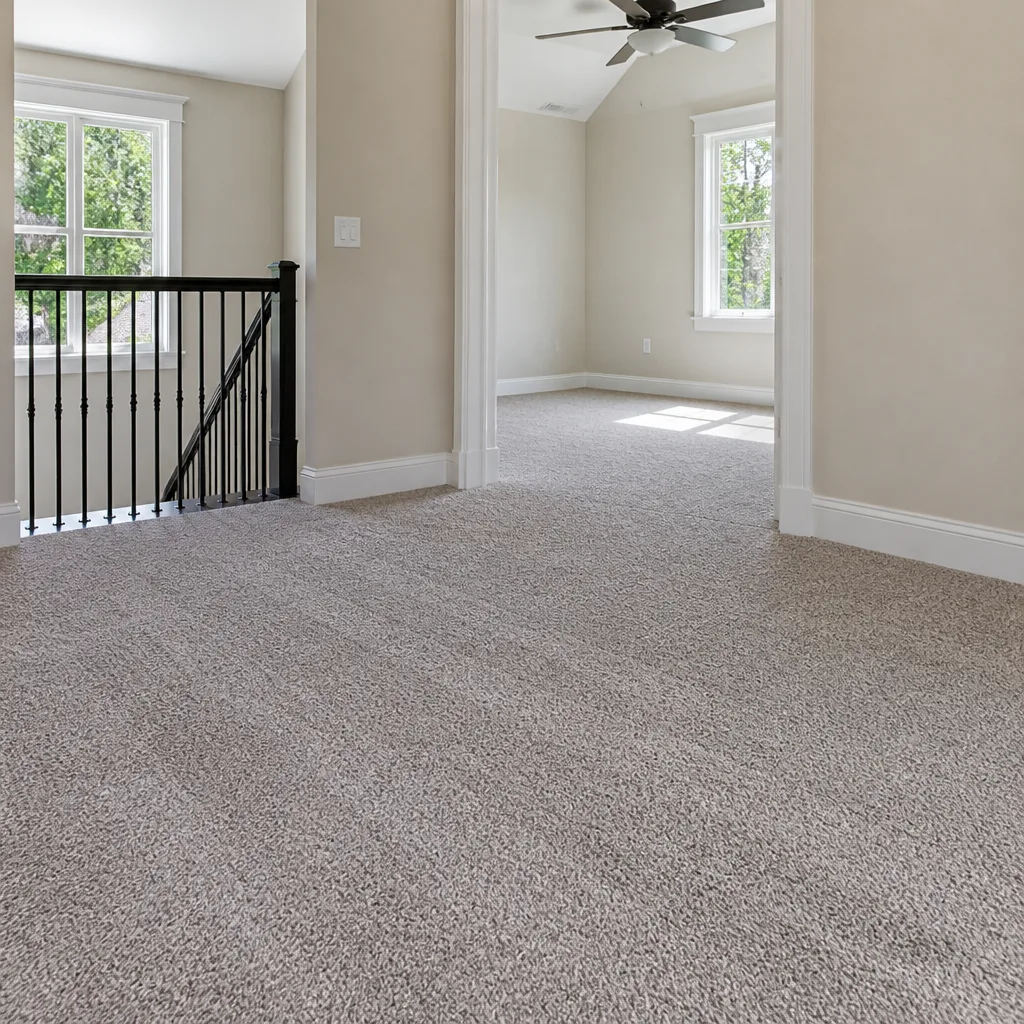
Carpet earns its place in bedrooms and media rooms, and it isn’t sentiment talking. Carpet absorbs sound, so a bedroom stays quiet when someone’s watching TV down the hall, and it feels warmer underfoot than any hard surface on a cold desert morning. In a media room, that acoustic absorption is the whole reason to choose it. For these rooms, we don’t push hard floors just because they’re modern; we match the material to how the room is used.
The variable in a bedroom is the household. Pets and high foot traffic change which carpet construction makes sense. Here’s how we frame it:
- Low-traffic guest room or adult bedroom. A softer, plusher construction is comfortable and appropriate when the room isn’t in constant use.
- Kids’ rooms and pet households. A tighter, denser construction holds up better to traffic and to the occasional accident. Brands we install, including Shaw and Mohawk, offer constructions across that range.
- Media and bonus rooms. Prioritize sound absorption and a comfortable pile. The room’s job is to feel enclosed and quiet.
One honest note on pets and kids: no carpet is stain-proof or accident-proof, whatever the label suggests. What you can do is choose a construction that’s denser and more resilient, keep a good pad under it, and clean spills promptly. The pad matters as much as the carpet, because it cushions the traffic and absorbs sound. When a bedroom floor is planned correctly, it’s the quiet part of the house that just works. Our carpet installation service covers the measurement, pad, and install as one coordinated job.
Great Room Continuity Across the Open Plan
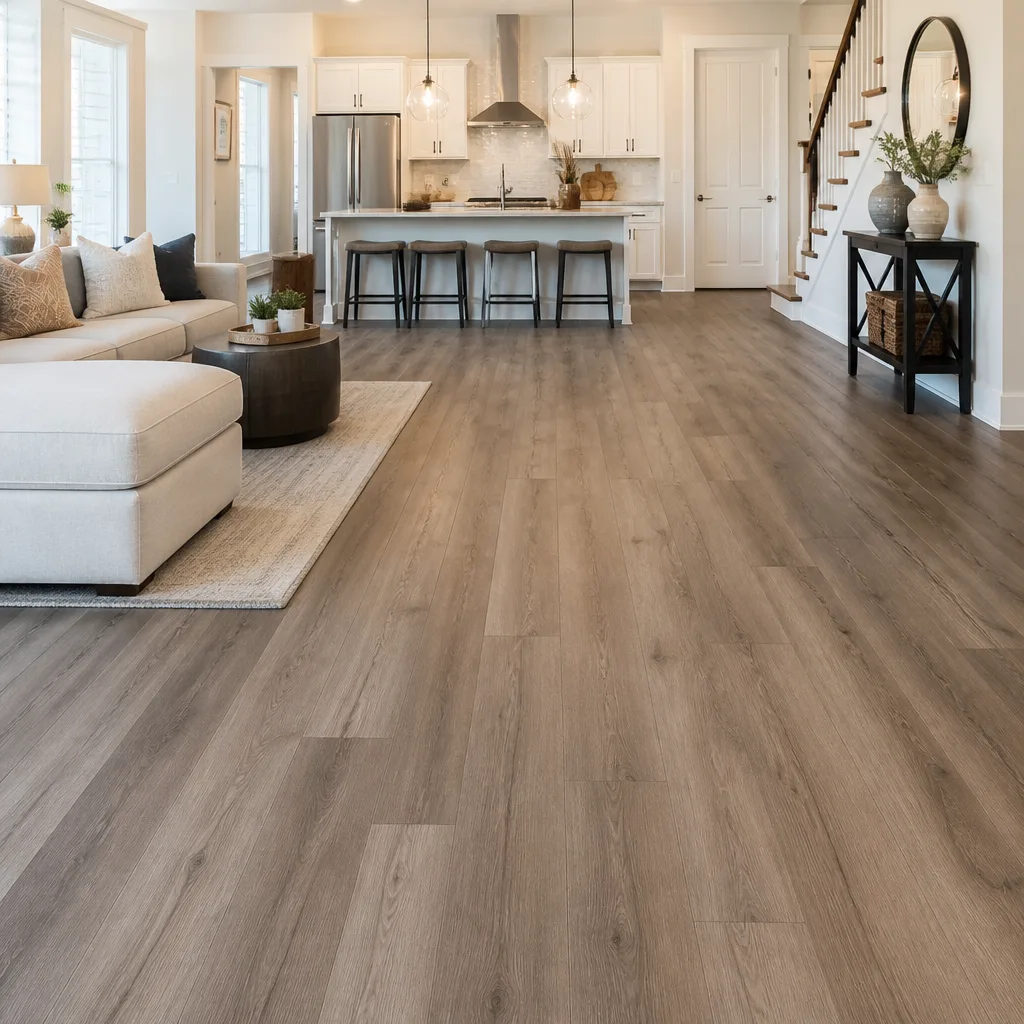
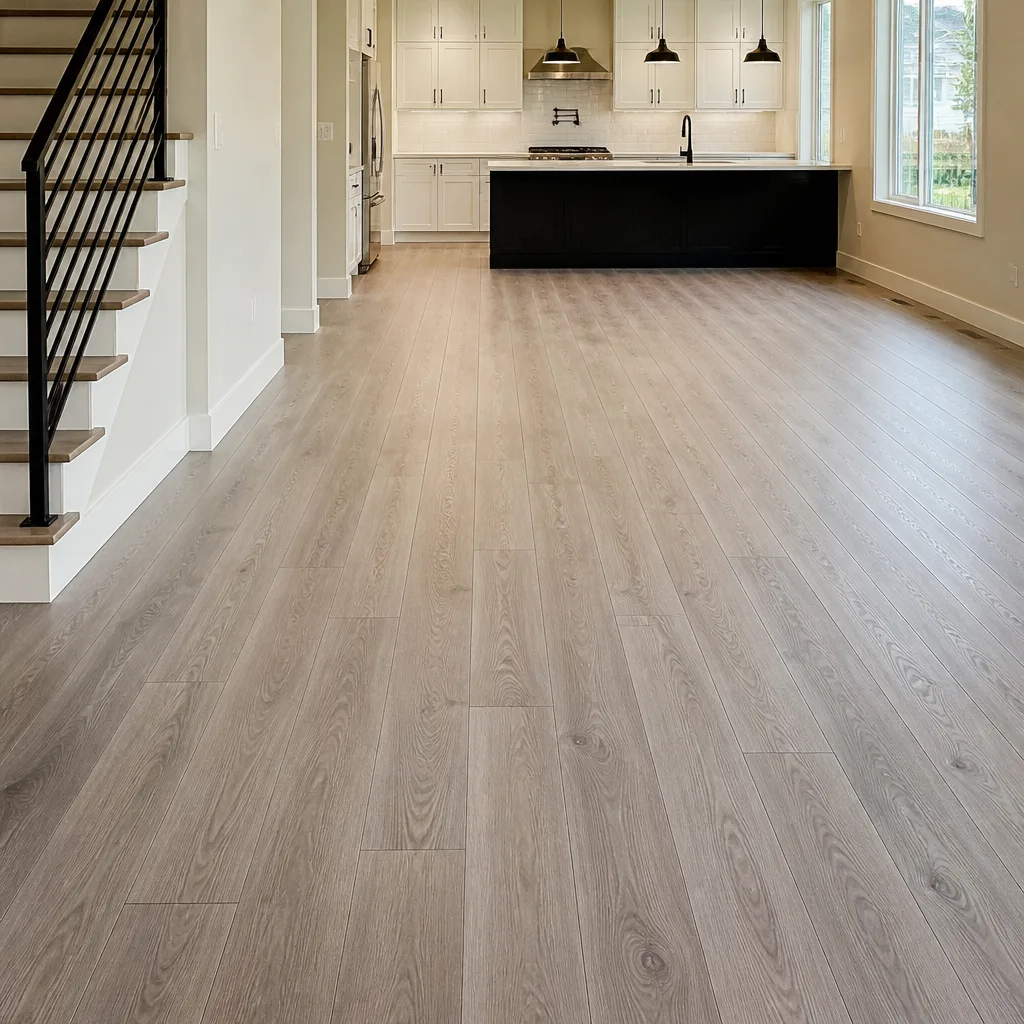
North Las Vegas homes increasingly open the kitchen, dining, and living areas into one large connected space, often 600 square feet or more. The instinct is to run one material across the whole thing, and that instinct is usually right. A single floor makes a big room feel bigger and removes the awkward transition strip in the middle of your living space. The trick is choosing a material that can span that distance without buckling or gaping.
Floating floors are the ones to watch on a long run. A floating plank floor moves with temperature and humidity, and over a large span that movement has to go somewhere. The product instructions specify the maximum run and where expansion gaps belong. Follow them, and a good floating floor can handle a large open plan cleanly.
Here’s the sequence we use to plan a continuous great room:
- Confirm the slab is flat and dry. A long run magnifies every high spot and every bit of moisture. Prep comes first.
- Check the product’s rated span. The instructions set the maximum continuous run and the expansion requirements. If the room is longer than that, a transition is necessary and it belongs at a sensible break, not in the middle of the traffic path.
- Pick one direction for the planks. Run them the long way through the space so the room reads as one.
- Set the transitions at doorways or room breaks. If you need a break, put it where a wall or opening already divides the space.
When done right, a single floor across the great room reads as one deliberate choice, not a patchwork. If you’re planning a whole-home project, our flooring installation in North Las Vegas team can help you map the layout room by room so the transitions land where they should.
Property Managers and Rentals: Durable First
If you manage rentals or own a small portfolio, your priorities differ from a homeowner’s. You’re not choosing a floor for how it feels on a Sunday morning; you’re choosing one that survives turnover after turnover and cleans up between tenants. That points toward durable, low-maintenance, water-resistant materials in the high-wear rooms and a hard-wearing carpet in the bedrooms.
Our approach for rentals:
- Kitchens, baths, and entries: water-resistant plank rated for wet areas, or porcelain tile. Fewer surprises, easier cleaning.
- Living areas: a durable plank or tile that can take furniture drag and constant traffic.
- Bedrooms: a denser carpet construction that cleans well between tenants and holds up to traffic.
Installed once and done right saves you the callback and the re-rent downtime. For a landlord, the worst outcome is a floor that fails in year two and forces a unit offline. Choosing for durability up front is the cheapest path, even when it isn’t the lowest sticker price. Our North Las Vegas installation team works with property managers to plan a floor that a tenant can’t easily ruin.
How to Think About Cost and Value
We don’t publish flat pricing, because a floor’s cost depends on the room, the material, the prep, and the size of the job. What we can do is help you think about where the money goes, so you’re making an informed decision rather than guessing.
- Subfloor prep comes first in the budget. Flatness and moisture work aren’t glamorous, but skipping them is what causes a callback. Prep protects the material you paid for.
- Wear layer over price tag. In a busy home, a floor with a thicker wear layer costs more up front and less over time, because it doesn’t wear through where the traffic is heaviest.
- Match material to room, not to a single price point. Nine brands, one decision: our portfolio spans several performance tiers, so each room can get a material suited to its job rather than forcing one product everywhere.
- Refurbish before replacing. If you have existing hardwood, refinishing can extend its life without a full replacement. Whether it can be refinished depends on the thickness of the wood and its condition, which we check at the estimate.
Every job gets a written estimate, and that estimate sets the final price. The estimate is free, so there’s no reason to guess. Product-level coverage from the manufacturer applies alongside the installation work, and the written estimate spells out what’s included.
Common Mistakes to Avoid
- Choosing color first and specs last. Color is easy to change later; performance is not. Pick the material that fits the room’s conditions, then choose the finish within it.
- Putting laminate in a kitchen with water on the perimeter. An ice maker or dishwasher on a shared wall is a slow-leak risk that laminate can’t absorb. Choose a water-resistant plank or tile instead.
- Skipping the slab moisture and flatness check. In a concrete-slab North Las Vegas home, this is where floors fail. Test before you buy.
- Running a floating floor past its rated span. A large open great room magnifies movement. Follow the product’s maximum run and set transitions at sensible breaks.
- Assuming “waterproof” means anything goes. Even water-resistant floors need standing water and moisture from below handled. A wet slab is a separate problem from a spill.
- Under-buying the wear layer in the entry. The dust and grit dragged in the door grind at thin surfaces. A 6-mil or better wear layer lasts longer in the busiest spot.
- Trying to coordinate three contractors. Carpet, tile, and a hardwood refinish handled separately means finger-pointing when something doesn’t line up. One company, three focused services, one point of accountability.
See the difference
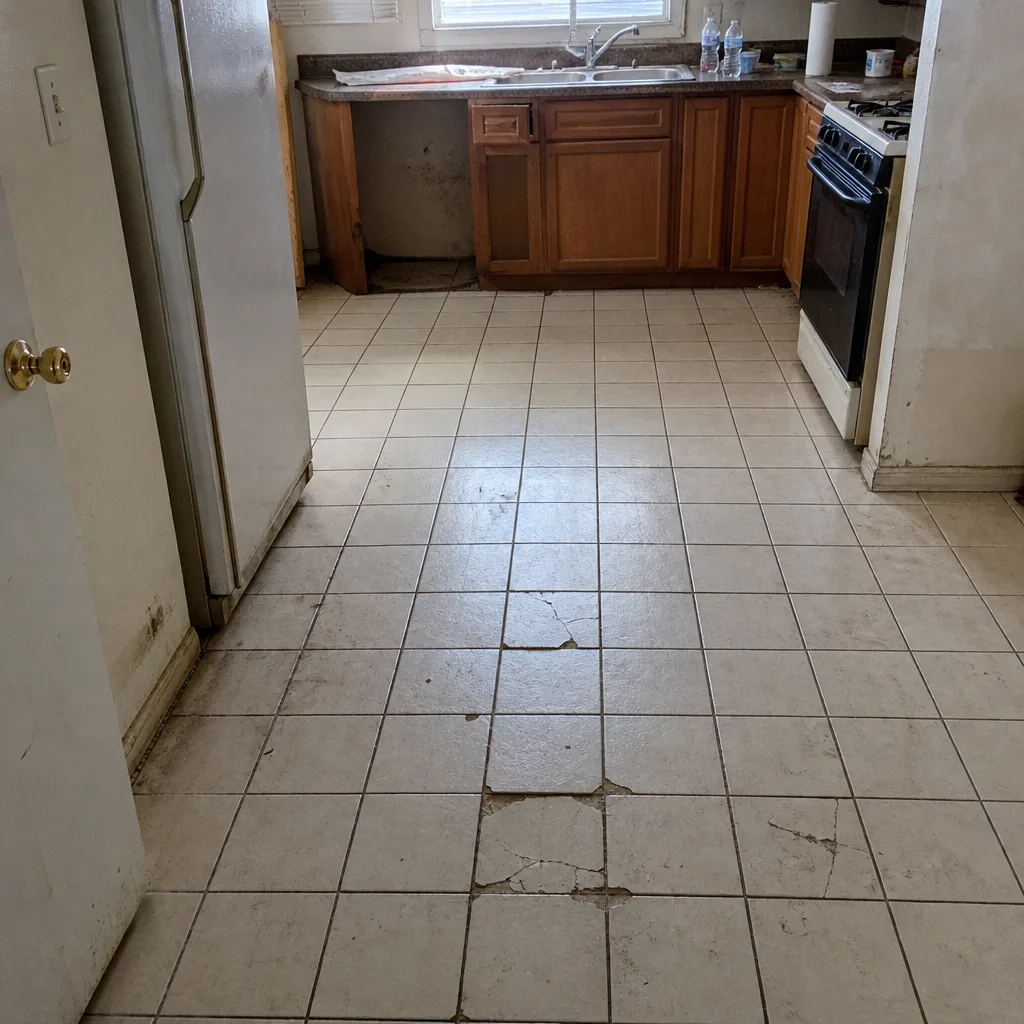 Before
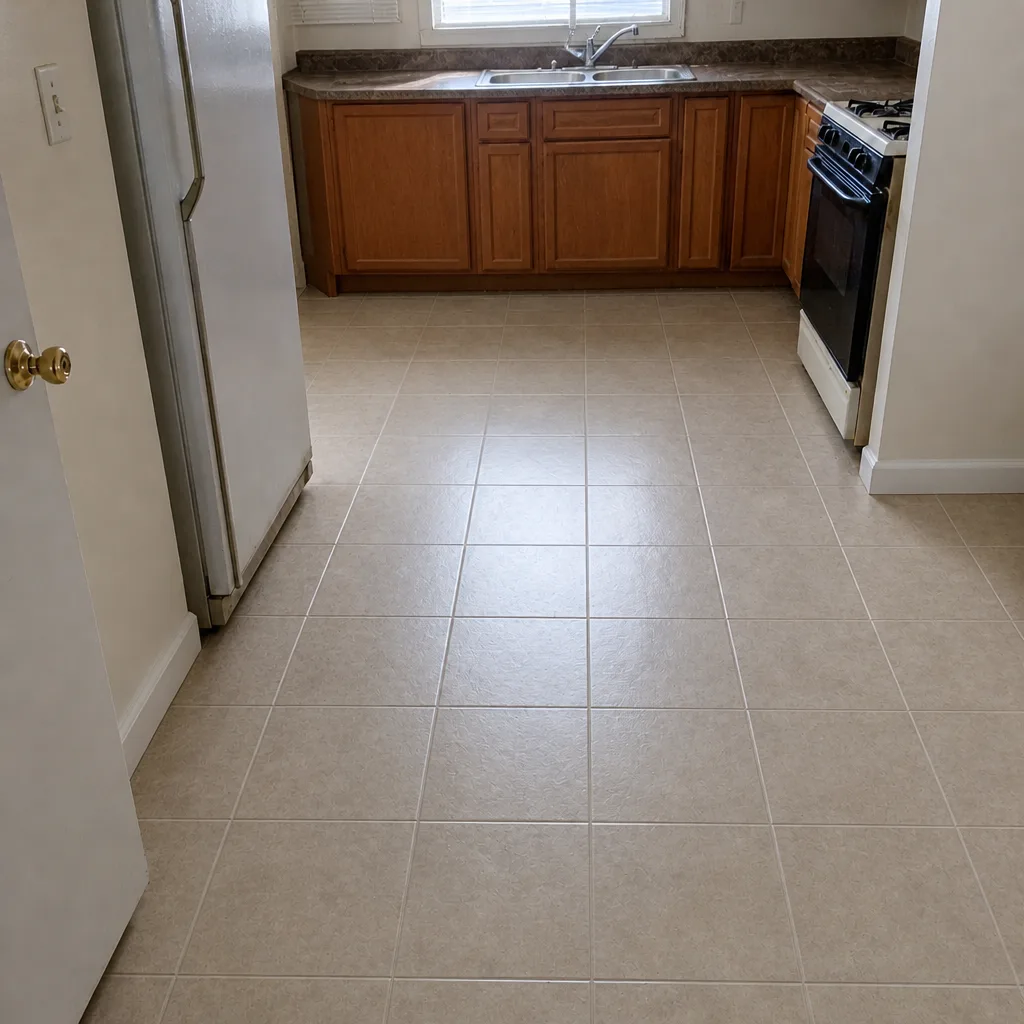 After
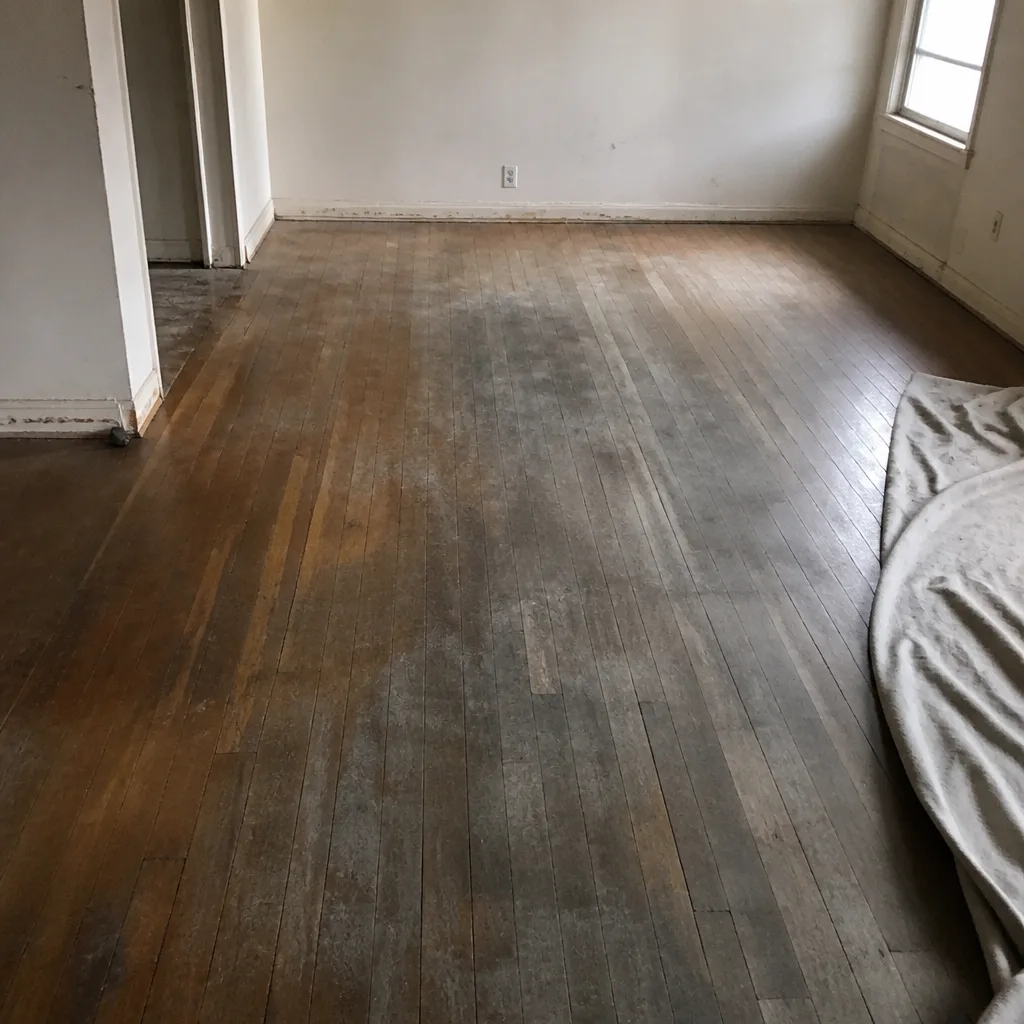 Before
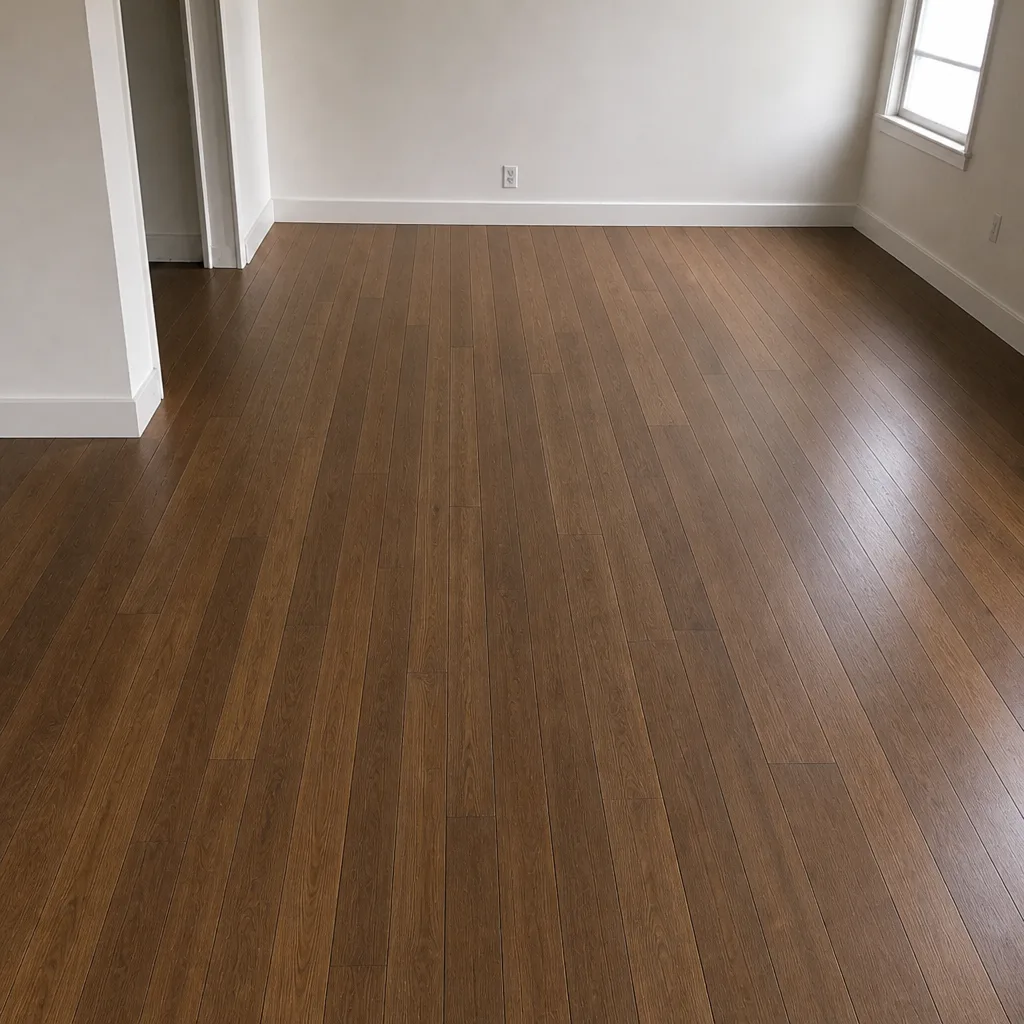 After
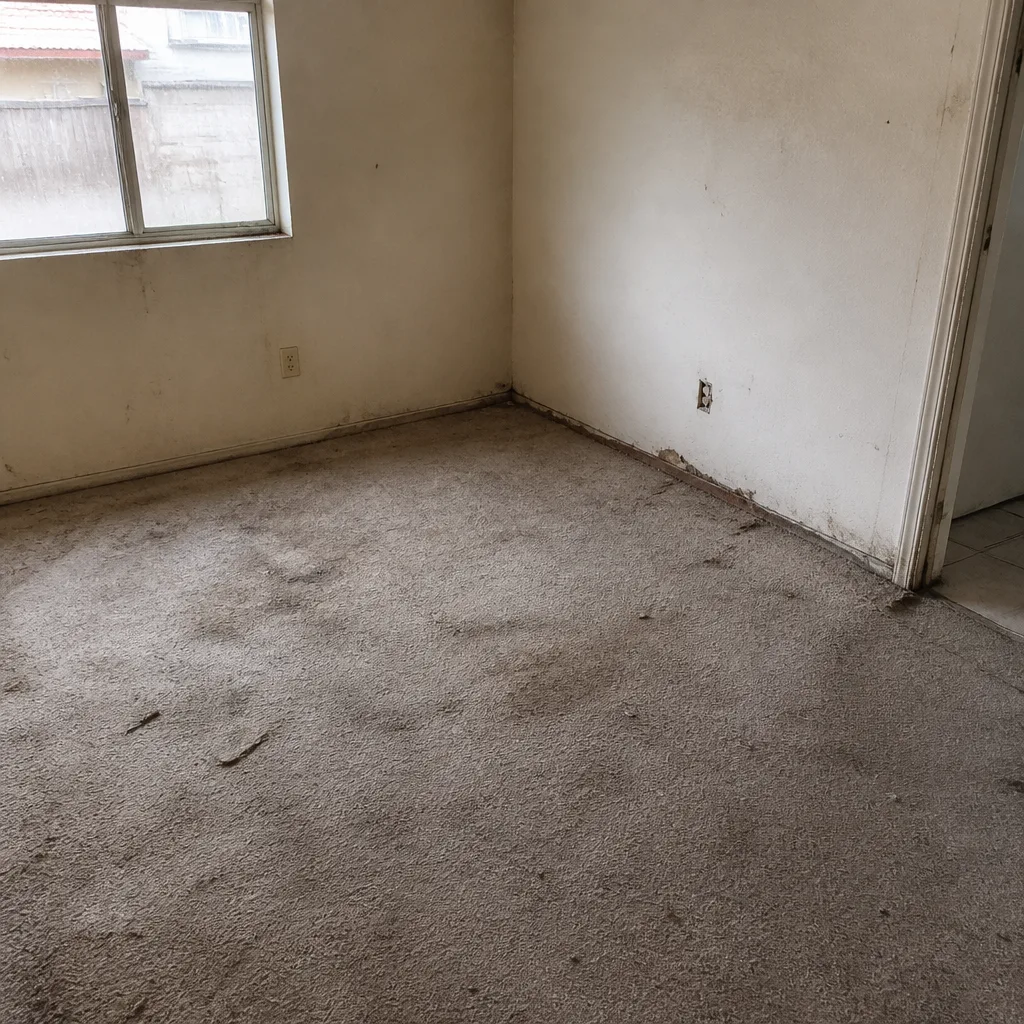 Before
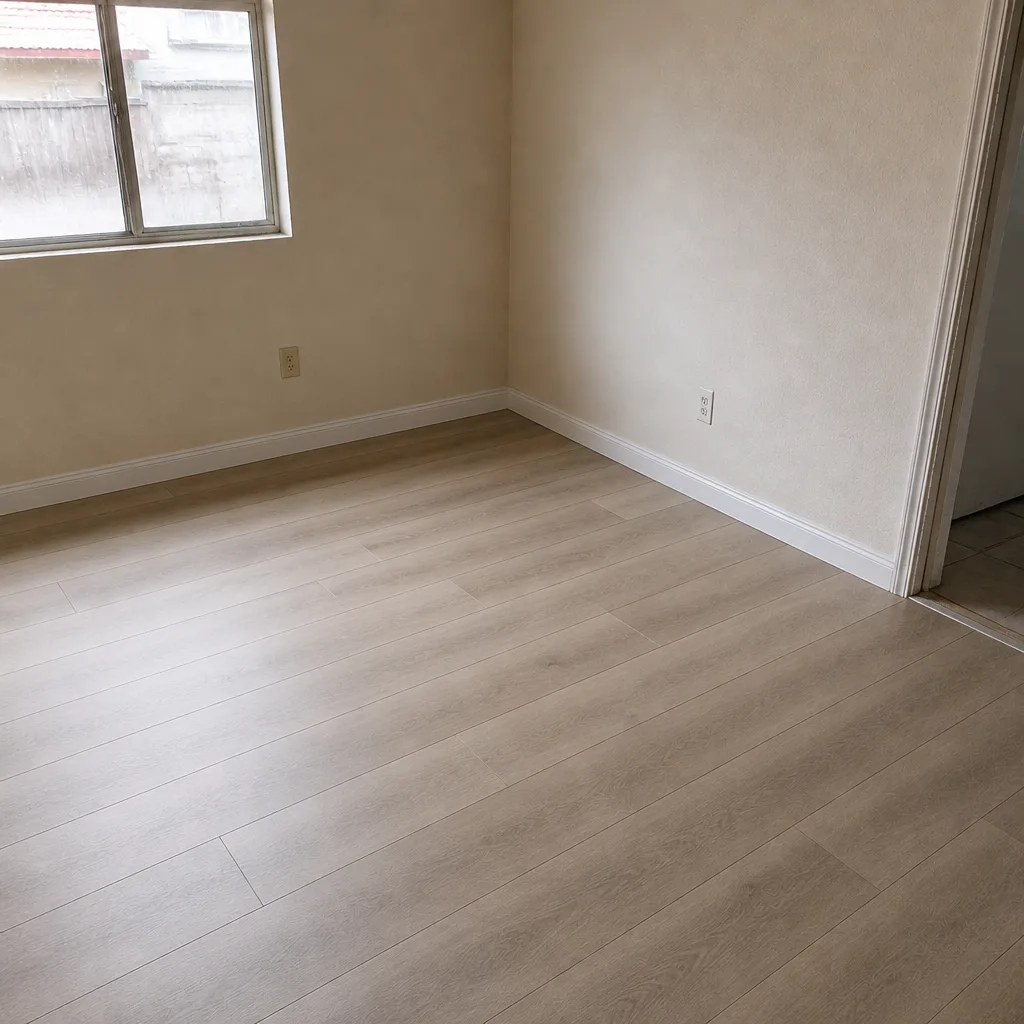 After
When to Call a Professional
Some decisions reward a second set of eyes. If your slab tests wet, if the great room is larger than the product’s rated span, or if you’re weighing tile against a water-resistant plank for a bathroom or laundry, that’s when a professional assessment pays for itself. If you have existing hardwood and aren’t sure whether refinishing can save it, that’s a judgment call best made on site, where the wood’s thickness and condition can actually be checked. And any whole-home project, where one material has to flow across several rooms with transitions that land in the right places, is far easier to get right when it’s planned in one pass. Flooring Installation North Las Vegas offers free estimates in North Las Vegas – call (888) 515-5223. Our technicians have up to 12 years of experience, and the written estimate sets the final price.
Frequently Asked Questions
For a busy entry, a luxury vinyl plank with a wear layer of 6 mil or better handles desert grit and shoe drag well, while large-format porcelain tile suits a formal foyer.
Laminate is risky in any kitchen that shares a wall with an ice maker or dishwasher, because its core swells if water gets in and doesn’t dry back down. A water-resistant plank or porcelain tile is the better match for a wet kitchen.
Sheet vinyl or large-format porcelain tile are the two choices we consider truly defensible in a bath or laundry on a slab with no drain pan under the washer. Both handle water far better than a material with a swelling core.
Yes, one continuous material across an open great room works when the slab is flat and dry and the product’s rated span is respected. Follow the instructions for maximum run and put any needed expansion transition at a natural break, not in the traffic path.
Bedrooms and media rooms benefit most from carpet, because it absorbs sound and feels warmer underfoot. In homes with pets or heavy traffic, choose a denser, tighter construction and a good pad.
Cost depends on the room, the material, the prep work, and the size of the job, so there’s no single number. A free estimate gives you a written price for your specific project. Call (888) 515-5223 to schedule yours.
The Bottom Line
Flooring choices in North Las Vegas homes go better when they start with the room’s conditions rather than the showroom color. Concrete slabs mean moisture and flatness are the first decisions. The entry rewards a tough, thick wear layer. The kitchen punishes laminate near water. The bath and laundry demand tile or vinyl. Bedrooms and media rooms still belong to carpet for sound and warmth. And a great room wants one continuous material, chosen with the span in mind. Get the performance right and the finish becomes an easy, low-risk choice. Match material to function, and you’ll pick a floor you don’t have to replace in year two.
Call (888) 515-5223 for a free estimate. We answer 24/7. Fast dispatch from 7am to 7pm, Sunday through Friday.
Written by the team at Flooring Installation North Las Vegas.